-
-
PBS Hasn’t Kept Up
-
Things are tough in the world of public television.
State budgets for local stations are being slashed or eliminated, as in Rhode Island where Gov. Lincoln D. Chafee has proposed to fund Channel 36 through Dec. 31 and then eliminate state funding.
Five states have eliminated funding and others have cut contributions.
In Washington the federal contribution, through the Corporation for Public Broadcasting, is under constant attack from Republicans who believe that PBS is biased and that it shouldn't receive any public money whatsoever.
Mitt Romney says no to federal money.
But a larger problem for PBS and its stations is one of mission.
When the service was created in 1970, the mission was apparent: Create quality programming that couldn't be found elsewhere. As PBS was cobbled together from a collection of educational stations, children's programming was always an important element and remains so; also books, cooking, political talk, business, interviews, documentaries, music and drama.
Over time, the television landscape has changed out of recognition.
Competing broadcasters, to say nothing of the Internet, have eroded the once solid franchises that were the backbone of PBS broadcasting.
Books have been largely ceded to C-SPAN and the ever-creative Brian Lamb. Cooking, far from the glory days when the only place you could find out how to make a roux was from Julia Child, is now the theme of two cable cooking channels that are creating new stars.
Political talk, which in its modern incarnation was born on PBS with "The McLaughlin Group" and "Firing Line," is now a staple of commercial television. Likewise, cable has pushed ahead of PBS in developing business (Remember "Wall Street Week"?), interview, history and arts channels. Other PBS innovations like "Motor Week" and "This Old House" are also under attack on cable.
Running down the list of what PBS does that no one else is doing brings one to the last franchise that PBS still dominates, and that might be called the "British bonanza." PBS has been mining effectively the output of both the BBC and the commercial British television channels with great effect since the days of "Upstairs Downstairs" (commercial in Britain).
Today, in its struggle for audience, another British import, "Downton Abbey," is the brightest star in PBS's dimming firmament.
If PBS is to again command the community loyalty it once enjoyed, if it is to answer its political foes, if it is to be a decisive force in television and perhaps on the Web, it needs to stop whining about money – now part of its demeanor – and to ask itself, "Is it new?" Is it bringing in and developing young talent? Is it doing something, anything, that will be imitated around the world? Is it creating programs that will bring in dollars in syndication and entice sponsors to be associated with the excitement?
In the 1960s the BBC, which had become a national treasure during World War II, had lost its way. Commercial television was eroding its audience and pirate broadcasters were attacking its radio franchise. The BBC got off the couch and joined the creative fray, especially the satirical revolution. Bam! It was back.
Of course, the BBC with its private tax, called a licensing fee, had a lot of money to spend. But it wasn't money that saved the BBC from ignoble decline – it was unleashing creative forces in post-Empire Britain.
Particularly, the BBC encouraged young writers and producers. It worked.
PBS should think of itself as an incubator, not as a roost for the old, the tired and the timid. Had PBS, or rather one of its bigger stations, been offered "The Daily Show" or its stable mate "The Colbert Report," it's hard to imagine that they would've been welcomed.
Yes, PBS, those retread English comedies and Lawrence Welk won't cut it going forward. –For the Hearst-New York Times syndicate
- 3 responses
-
-
-
What Makes a President: Fallacies about Business, Markets
-
Come walk in the garden where the fallacies grow. Today, we’ll examine two varieties that are enjoying strong growth: the businessus presidentus and the marketus perfectus.
The first fallacy (businessus presidentus) is that a business person, presumably Mitt Romney, is better equipped to run the government than a professional politician. This is an idea as old as anything in the garden. The supposition is that business people are organized, understand the economy and are less prone make decisions based on politics. It also suggests that as a species they are innovative, strategic thinkers and have an acquired understanding people.
Well let's see: The purpose of business is business; in short, to make money. Romantics of the right like to credit it with virtues it doesn't have and doesn't want.
Business is about the numbers, and making the numbers. It’s not intrinsically wise, nor is it necessarily more inventive than government.
It’s true that business innovates; but only when it’s forced to by competition and disruptive technologies. Coca-Cola was supposed to be the smartest company on the planet until it introduced New Coke and had to beat an ignominious retreat. Many old and new businesses simply can't change fast enough. We’ve seen the demise of Kodak, Polaroid and Borders and the emasculation of Western Union. The American car companies had to be rescued — especially General Motors which was a model of management structure, celebrated by Peter Drucker, until its management choked the life out of it.
If Romney has the skills to be a good president, he didn't learn them in the wheeler-dealer world of investment banking – Remember Lehman? – but rather in the statehouse in Boston. By and large, business success prepares a man or a woman for retirement and maybe volunteer work, not political office.
The Washington trade associations periodically decide what they need is “kick-ass” business person. In time, they find someone who knows the ways of Congress to be a lot more effective than someone who can read a balance sheet.
Then there’s the workforce difference. Management controls the workforce in private industry, but the workforce often controls the management in government. Only the military is exempt from this rule. Presidents down to junior political operatives chafe under this reality.
The second fallacy (marketus perfectus) is about markets being next to godliness. Markets are an efficient way to distribute goods and services at affordable prices. But they are as cruel as they are efficient. They exterminate and reward.
It’s a heresy in conservative circles to point out that national interest and market interest do not always coincide. But among treasured companies that have been saved by government intervention in the market are Harley-Davidson (price barriers), Lockheed (loans), Chrysler (twice with loans, and later part of the great Detroit bailout).
It can be argued that some of our current economic woes are the market doing what it does best: seeking the lowest-cost, competent production. It was that which lead to the export of our manufacturing. Companies flooded China because they got the three things they sought and which they sought to satisfy the marketplace: low wages, talent and reliability. They didn’t flood to other cheap-labor places like sub-Saharan Africa, but to China which knew how to please.
People who have really changed the political landscape in Washington have been professional politicians, or those who have embraced politics as a second career, like Ronald Reagan. Richard Nixon changed it not by his misdeeds, but by creating the Office of Management and Budget from its predecessor the Bureau of the Budget. In so doing, he increased the power of the presidency and downgraded the Cabinet. And the consummate Washington insider, Lyndon Johnson, enhanced the president's war-making prerogatives — even though it would’ve been better for him and the nation if he hadn't.
If Romney makes it to the Oval Office, he'll have Massachusetts on his mind not Bain & Co. You won't get the garden to bloom with the wrong seed. –For the Hearst-New York Times syndicate.
- no responses
-
-
-
Democracy Has a Tentative Start in Kazakhstan
-
Is it the felt revolution or the fur revolution? Or is it a revolution at all? (In Kazakhstan, nomads still use felt to build their tents, called yurts, and to wear a fur coat in Astana, the modern capital, is not a luxury because temperatures can plummet to -40 C in winter.) But political change – slow, to be sure – is taking place in Kazakhstan: a vast oil-rich and landlocked country in Central Asia, which gained its independence in 1991, when the Soviet Union collapsed. The Russians had both tried to colonize (22.8 percent of the population is Russian) and use Kazakhstan as a dumping place for prisoners, for nuclear facilities and for some of the worst environmental experiments, particularly dooming the Aral Sea by reversing the rivers that once fed it. In mid-January, Kazakhs went to the polls for an election that could be the beginning – just the glimmering of a beginning — of a new era of democracy in Central Asia. In itself, this election was a small affair and was criticized as such by observers from the Organization for Security and Cooperation in Europe (OSCE). Myself and a colleague were invited as journalistic observers. We stayed in Astana and observed voting in just two locales, which were orderly and had a movie-set feel to them. We even got to watch President Nursultan Nazarbayev enter the voting booth, exit it and drop his ballot into a transparent box. Fur-wearing voters drop their ballots into a box at the National Academic Library polling station in Astana. Photo: Linda Gasparello
The OSCE observers were critical of the way the government determined which parties could participate. They were also critical of the high polling numbers provided by the government, which claimed 80.7 percent support for Nur Otan, the party of the president, a former Soviet official who moved quickly from communism to capitalism but hesitatingly to democracy. Yet in his 20 years of near absolute power, Nazarbayev has been popular. He has had the unique good fortune of being able to deliver above the expectations of his people. Nazarbayev has been skillful in positioning Kazakhstan as a friend to everyone. By doing so, he has cultivated comity with his some of his irascible neighbors, including Russia, China, Iran, as well as the less-friendly other “stans” that border his sprawling, underpopulated country (about 16.5 million people). He also has fostered good relations with ethnic minorities, including Uzbeks, Ukrainians, Uighurs, and many more. Likewise, with 40 religious groups: Kazakhstan is a predominantly Muslim country (70 percent, 26 percent Christian) with a secular tradition. Muslim women do not cover their heads; men are clean-shaven; the call to prayer does not ring out over Astana; and minority religions are permitted, including Buddhism and Judaism. Cleverly, Nazarbayev has also given his people a shiny bauble to be dazzled by: Astana. In a little more than eight years, this architectural extravaganza has risen on the Central Asian steppe. Astana is spectacular and incorporates a kind of World's Fair-meets-The Emerald City architecture: There is a building that looks like giant golden egg in a white-branched nest, one that opens like a flower's petals, and one that looks like a yurt. The best architects in the world, like Britain's Norman Foster, have been invited to play – and they have let loose. Palace of Peace and Harmony in Astana Photo: Linda Gasparello
But Nazarbayev's days as the Wizard of Oz may be drawing to a close, and the tentative nod to democracy may be an acknowledgment of that. He is 71. A new generation of ambitious, gifted and well-educated men and women now walks the streets of the capital; young people who wonder about the paternalism, want to play on a world stage, and do not remember the bad old days of Soviet domination. They worry about the pipelines that take Kazakh oil in many directions – at present, mostly into Russia and China. Especially, they worry what will happen when their president passes from the scene. After the disappointment of the Arab Spring, dare the world hope for a democratic birth on the Central Asian steppe? I think so. – For the Hearst-New York Times Syndicate - no responses
-
-
-
Fasten Your Seat Belt, Obama’s Driving Energy Policy
-
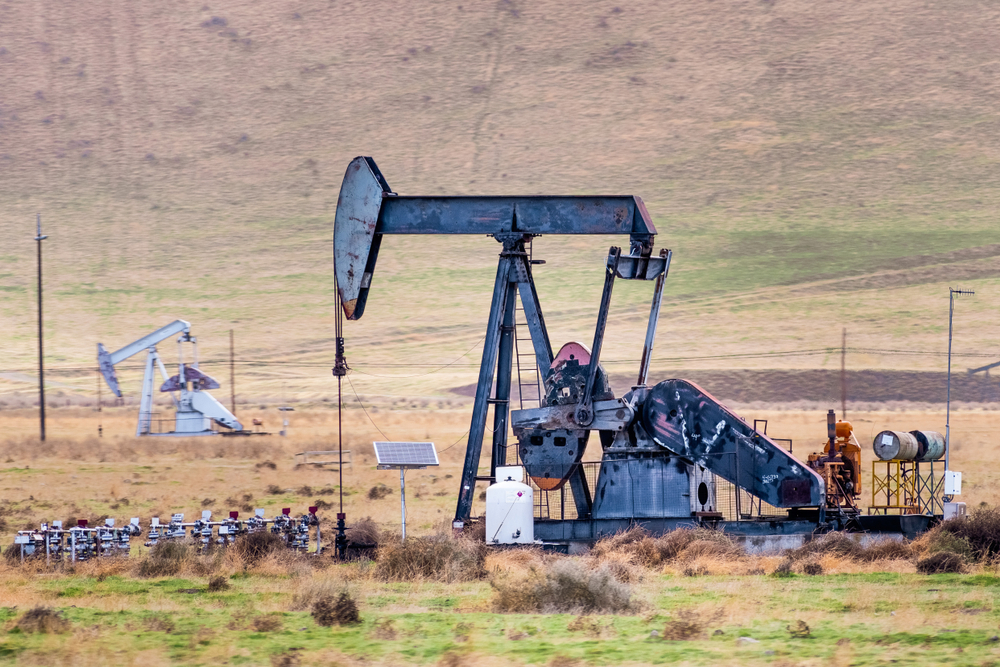
By Llewellyn KingIf President Obama were driving an automobile the way he's driving energy policy, he'd be stopped and breathalyzed.The president’s latest decision to defer a decision on TransCanada's Keystone XL oil pipeline is a sudden swerve to the left, after his sharp right turn in curbing the enthusiasm of the Environmental Protection Agency for limiting electric utility emissions.Similarly Obama has supported some new drilling for oil, but not in all the areas the industry would like to drill. He's in the middle of the road on this one, and no one is happy.On nuclear power, Obama signaled a right turn and veered left. He came to office endorsing the nuclear option, including loan guarantees. But in a tip of the hat to Senate Majority Leader Harry Reid of Nevada, the president opposed the Yucca Mountain Nuclear Waste Repository, and undermined the case he was making for nuclear.The mischief did not end there. Obama appointed Reid’s man, Gregory Jaczko, chairman of the Nuclear Regulatory Commission (NRC) to end the Yucca project and entomb, in effect, the $9 billion to $15 billion (depending on who is counting) in its abandoned tunnels. But because the government has longstanding legal commitments to take the waste, and has taken the money charged utilities (about $900 million a year) and treated it like tax revenue, the whole project has torn up the commission and landed it in court.Jaczko, a former Reid aide, has riled the other four commissioners and the NRC staff to such an extent that the four went to the then White House chief of staff to complain about the chairman. An act of frustration totally unprecedented and deeply damaging to the credibility of the commission. Nobody resigned and a damaged regulatory body is now passing on the safety of the nation’s nuclear fleet. To all appearances, the chairman’s remit was to tear things up in the commission; that he has done.In particular, the issue of licensing of Yucca Mountain has caused ructions. Jaczko has stopped the licensing in what the quasi-judicial Atomic Safety and Licensing Board in the case considers an illegal act. According to Marvin Fertel, president of the Nuclear Energy Institute, the industry wants the licensing to proceed if only to establish that Yucca was the right way to go and that it can stand the scrutiny that the NRC would give it in licensing. Fertel says that it's a marker for the future.Opponents of Yucca, presumably including Jaczko, fear that a license would pave the way for the Yucca project to come back to life under a different administration. Did Obama, a lawyer, not know that political brute force in a regulatory agency is bound to throw it into disarray, and to leave its decisions to be impugned in court later? So why did he do it?When it comes to alternative energy, Obama positively drove on to the left shoulder. The administration has promised wonders from wind, solar and advanced coal combustion. It has thrown money at these as though it were rice at a wedding. The most conspicuous of this mind-over-matter exercise was, of course, Solyndra. But the spending has been lavish, indeed promiscuous, and the bankruptcies are filling up court dockets and right-wing Web sites.Yet, the gods have smiled on the Obama administration. A boom in natural gas, brought on by new technologies, and enhanced oil production, fathered by the same technological improvements, have brought oil imports down below 50 percent for the first time in 20 years. Electricity supply is holding.Environmental organizations, having been cold-shouldered on climate change by the world in a time of economic upset, picked on the Keystone pipeline with fury. Particularly apoplectic about it has been the Natural Resources Defense Council, which hopes that by canceling the project, Canada would stop developing its oil sands.No, says Canada. I spoke with Canadian Natural Resource Minister Joe Oliver shortly before Obama's first decision to delay the pipeline. Oliver said that if the decision weren't favorable, Canada would build a pipeline across the Rockies to British Columbia and export to China.The latest setback has infuriated Prime Minister Stephen Harper's government, which now says it will no longer rely almost entirely on the U.S. market for its hydrocarbon sales.So Obama’s latest swerve has angered our best ally and good neighbor, denied American workers thousands of jobs and will oblige refineries on the Gulf Coast to buy oil from unfriendly places on the world market.He has also given the Republicans a handsome gift in an election year. Masterful! – For the Hearst-New York Times Syndicate
- no responses
-
-
-
Winding Down the Nomination Show
-
Now that Mitt Romney is pulling ahead, I’m saddened to see the greatest political show in years drawing to a close. When will we again thrill to the way Texas Gov. Rick Perry parachuted into Iowa and eclipsed Michele Bachmann briefly? At that moment the nomination was Perry’s to lose, and he wasted no time in losing it. He entered stage right with Texas panache. Writers and broadcasters, including myself, who had the temerity to question the Texas mystique – that famous swagger – got an earful from Lone Star loyalists. One thought that I should be roped and dragged behind a cutting horse. Another volunteered to do it. Texans with six-shooters on their hips were ready to defend the honor of their state with cordite. That was until their leader drew a bead on his own foot and fired. It wasn’t so much that Perry forgot the government department that was bringing down the United States, but that he gave the impression he had never heard of any of his targets before they were whispered to him seconds before he walked to the podium. One prefers one’s political heroes to explode rather than implode. We want to be able to laugh out loud, not feel terribly sorry. Poor Perry. When he had to substitute piety for swagger, it was over. We want our Texans loud and brash with belt buckles as big as lesser states. A personal favorite of mine was Herman Cain. Damn it. I liked him; an original by any measure, I’d say. But he was brought down by something less than original: a roving eye directing a roving hand. Jobs-for-sex would not, one feels, solve the unemployment crisis. I didn’t care that Herman the Lover didn’t know where Libya was. If it had had a Godfather’s Pizza franchise, things would have been different. The guy was appealing. While pizza may not have the same ring as computers or pharmaceuticals, he had a great resume as a mathematician and naval officer. It could be argued that Cain and that other roguish aspirant for high office, Newt Gingrich, at least have standard-issue libidos. The rest were, well, a little sexually hung up. The lovely Michele Bachmann, the righteous Rick Santorum and oh-so-pure Romney, who apparently has been untouched by human temptation or anything else as messy as human beings and their needs, all suffer from moral fundamentalism. It’s hard to imagine Romney as evincing passion of any kind, even though he is the father of five. Santorum is the most fanatically puritanical about sex. Especially gay sex. To Santorum, the family is the triumph of human achievement. Not since Oliver Cromwell, apparently, has anyone cared as much about the family or its sexuality as Santorum. For him it’s not the individual that builds the state, but only the family — unless it’s the gay family. Indubitably big government is dandy, so long as it’s in someone else’s bedroom. The same anti-gay fundamentalism animates Bachmann and, apparently, her husband who has a clinic to “cure” homosexuals. What is it about these people that has them so frothed up about other people’s private acts? Oh, let it go if they froth in private. Who cares now that the race is narrowing? When Gingrich goes, I’ll be shattered. Gingrich and his wife Calista standing by him as immobile as a cigar-store mannequin, belong on the high shelf of American political bric-a-brac. Gingrich sprouting his version of history, his version of his own role in history; Newt magnanimous in his brief ascendency and bitter as oblivion threatened. This was the Man Who Would Be President unmasked. The consolation prize of National Grouch surely belongs to Newt. Of course there was a bit player, an understudy, someone qualified but unsung: enter, stage center, Jon Huntsman. A brief appearance, exit stage left. No applause, no mention in the program even. So dim the lights, bring down the curtain, strike the set – never have so many outrageous eccentrics so unsuited the highest office in the world so entertained so many of us for so long. Sadly, the long national farce is over. – For the Hearst-New York Times Syndicate - no responses
-