-
-
We Are All in the Euro Zone in a Way
-
To paraphrase Leon Trotsky, you may not be interested in the euro but the
euro is interested in you.If the Europeans get it wrong and there is a cascade of defaults by
financially weak European countries, led by Greece and followed by Italy,
Spain and, maybe, Portugal, then a world financial crisis would result and
the euro might collapse.The epicenter of the crisis would be Europe; but every economy would be
shaken as currencies realigned, banks collapsed, and gold soared to even
higher and more unsustainable levels than today.If the euro collapses, so possibly would the European Union itself. That
would be a great historical regression, a reversal of a noble purpose. And
it would leave the continent vulnerable to the will of the strongest. In
this instance, Germany. No one thinks that is a good idea. Not even the
Germans.The European Union has one overriding purpose: peace in Europe. That was
the inspiration of its founders, who planned a customs arrangement in 1958
between six nations that had suffered two great wars and had a 2,000-year
history of internecine war. As the generation that had known war died out
and was replaced by generations that have known peace and prosperity, the
purposes of European integration became more clouded and more political.The committed Europeans wanted a form of European federation: a kind of
United States of Europe. But national interests prevailed and Europe has
been shaped instead by leaders who want a kind of United States-lite: an
affiliation of nations rather than a true union.Lacking a central political voice, Europe slipped into a rancorous family
arrangement where every nation – now 27 of them – is an in-law. Disparate
family members bound together in self-interest.This has resulted in dysfunction at many levels and created the impression
– emphasized by British Conservatives and American right-wingers — that
the whole enterprise has failed. In reality, there is more success than
failure.The so-called democratic deficit is the most glaring weakness. European
national legislatures are still where law is made, not in the European
Parliament, which has no power and is a sort of giant talk show – Sunday
morning talk show writ large.Instead, the power has been concentrated in the European Commission. Based
in Brussels, this is where Europe is governed by bureaucrats through
licensing and regulation. The commissioners reap the ire of politicians
throughout Europe and reflexively in Britain.The commission makes rules about everything and tries, so much as it can,
to “harmonize” products and labels. But French wine producers, Italian
pasta makers do not wish to be “harmonized,” even though they appreciate
the ease of intra-European trading, road subsidies and farm- support
prices.Poles appreciate the freedom of labor to move to more prosperous countries
and the workers in those countries resent the immigrants. Individuals,
particularly small business operators, object to health and safety
standards coming out of Brussels. But they don’t hesitate to run to the
European Court in Luxembourg if they feel they are not being treated right
by their own government. Indeed, the court is one of Europe’s successes.The rest of the world has been able to find a common voice in the European
Union, instead of 27 separate voices. The union has worked despite its
flaws.The common currency, the euro, is something else. It was wished into being
by strong, idealistic forces. Seventeen nations are in the currency union
and 17 finance ministers are not sleeping well.It was always known that the euro had one great weakness: no regional
flexibility. Overheated countries could not cool off by allowing their
currency to rise and weak ones could not boost their exports by devaluing
the currency. One size fit all, badly. Many economists warned of this
inherent weakness when the euro was introduced in 1999.But the European architects so wanted the building block of a currency
that they ignored the problem and forged ahead. It also had to be known
that certain countries were cooking the books, notably Greece, to get into
the euro.So why not disband the euro? How? If the euro is withdrawn, how to do that
without true chaos? Suppose Greece, Italy and Spain try to return to the
drachma, the lira and the peso? Who would convert their euros to drachma
or lira or pesos? Who would trade a known currency for a fledgling one? If
the euro were to be withdrawn altogether who would not want German marks
over Irish pounds?All the options for Europe besides riding out the crisis with, ironically,
lashings of German support, look catastrophic for Europe and nearly as
disastrous for us. We caused a global tremor with the housing bubble, but
the euro can cause the full earthquake. – For the Hearst-New York Times Syndicate - no responses
-
-
-
Ethanol Can Be too Much of a Good Thing
-
Do you want a tiger in your tank or a bureaucrat?This isn't an idle question, because the federal government, under successive administrations, has been keenly interested in the gasoline you burn, not just in your car but also in your boat, lawn mower, chainsaw and off-road vehicle.When a series of challenges have worked their way through the U.S. Court of Appeals for the District of Columbia, right in the middle of the 2012 elections, the composition of gasoline is likely to change.If the Environmental Protection Agency has its way, the ethanol content of gasoline will rise from 10 percent to 15 percent. This may not sound like much, but it's enough to wreak havoc on old engines in cars and on many marine and other engines, according to opponents.The arguments are:
- Ethanol is good because it reduces most tailpipe emissions, is made from U.S. corn and provides a steady and growing market for the nation's farmers.
- Ethanol is bad in quantity because it is a solvent that attacks various rubber components in engines and fiberglass in boat fuel tanks and can lead to catastrophic failures and fires. The U.S. Coast Guard has drawn attention to what it sees as potential loss of life with the failure of marine engines.
The EPA, charged by Congress with managing the ethanol in gasoline, says that all of these considerations can be met.The agency has approved the use of E15 fuel (15 percent ethanol and 85 percent gasoline) in newer vehicles, in addition to E10 (10 percent ethanol). It doesn't propose taking E10 off the market, but merely adding E15 as an option at the gas pump.The crux of the appeals court action is whether the EPA meets its obligations if the new fuel is not of a standard suitable for all engines.Opponents who are led by the American Petroleum Institute and the National Petrochemical and Refiners Association, and who include an array of groups from automobile makers to food processors, say that to offer both fuels would require a reconfiguration of gasoline stations, that the stations aren't equipped to handle the two similar products and that in reality E15 will drive out E10. They also say that E15 will have devastating effects in older automobile engines, marine engines and all other engines, including your emergency electric generator.Nonetheless, the EPA is hanging tough. It has to. Congress has put it between a rock and a hard place. Congress has mandated that ethanol use grow: The Energy Independence and Security Act of 2007 stipulates that renewable-fuel production and use must reach 36 billion gallons by 2022. Until something else comes along, this means ethanol.Blending in additives to gasoline goes back to the days when lead was added to reduce knocking and improve combustion. With the removal of lead, a compound called MBTE got in the mix; but this was found to enter groundwater from leaks. Meanwhile, the EPA wanted an oxygen-rich fuel to ensure fuller combustion and fewer nasties coming from the exhaust.Ethanol, which has had proponents since the early 1970s, was favored by the farm lobby and by those who thought it would reduce our dependence on imported oil, though it uses nearly as much oil to produce as it replaces.Democratic and Republican administrations nodded at ethanol, and President George W. Bush was passionate about it. In theory, Congress could reduce the pressure to use more ethanol. But in reality, Congress won't undo what it has done.Government has two tools to shift the market: mandates and subsidies. Ethanol has both tools working for it, unless the courts rule against the EPA on the technical issue of whether the new fuel will operate in all engines and meet the statute requirement for consistency.E10 helps combustion and octane-rating and reduces emissions as it is. E15 may just be too much of a good thing. – For the Hearst-New York Times Syndicate - 3 responses
-
-
-
Chronic Fatigue Syndrome: The Silent Suffering
-
In the world of chronic illness, there is hope and false hope; well-founded hope and dashed hope. New therapies, real or rumored, lift the spirits of the desperately sick before they are brought crashing down, when science comes up empty-handed — such as when a controlled study fails to confirm a cure, or even the path to a cure.This is what has happened this year to "the silent many" – people who suffer from Chronic Fatigue Syndrome (CFS), also known as myalgic encephalomyelitis. Silent because of all the big diseases, it is probably the least publicized, least talked about, and the most ignored in medical institutions — the institutions charged with protecting the public health. There are an estimated 1 million CFS sufferers in the United States, and another 16 million worldwide.As AIDS was initially, CFS is haunted by fear, stigma and ignorance. It is misdiagnosed and often its victims are abused, thrown out of their families, and live in squalor and pain with little hope. They despair that they cannot convince doctors, their families or their loved ones that they are, in fact, sick.There is no cure for CFS, just a lot of conflicting theory. There is nothing on the pharmacists’ shelves to relieve their suffering. Nothing.There are also powerful economic and institutional forces that have conspired to keep CFS in the shadow; in that world of anguish, where the victims feel they are to blame because they are a burden to those who love them. The costs of care are crushing.What is known is that CFS is a disease of the immune system; that it is reported among women by 3-to-1; that it has no cure — no certain day when the monster will leave the sick bed. It ebbs and flows in cycles — good days and bad days, good years and bad years. People who suffer say it confiscates their lives. There are terrible periods when one is so sick that one is bedridden for months or years.Most doctors are not qualified to offer CFS diagnoses, confusing it with other conditions. The rural poor are almost entirely on their own. Suicide is common, according to Marly Silverman, a sufferer who heads an umbrella group that calls itself Pandora.This year has been a mixed year for hope in the CFS community: A whole line of research has been dashed, and with it a lot of accumulated hope.Some researchers — particularly those at the privately funded Whittemore Peterson Institute in Reno, Nev. — had spent great effort in pursuit of a retrovirus, XMRV. The institute, and its scientific allies, had believed that XMRV was the culprit and that if this could be proven beyond doubt, then there would be a basis to develop an antiviral agent to arrest the disease. But separate studies in the United States and Britain have undermined the XMRV hypothesis, leaving the hopeful bereft.At the same time the use of an experimental drug, Ampligen, is helping a patient elite of about 750: They can get the drug in limited trials and can expect to pay between $25,000 and $40,000 a year for it. Ampligen's manufacturer is a small company, Hemispherx, which has to charge its trial subjects. Unlike large drug companies, Hemispherx cannot administer Ampligen in trials for free, and it needs much more clinical data before it can get full Food and Drug Administration approval.Ampligen bolsters the immune system: While being treated with the drug, patients report an abatement of symptoms, greatly improving the quality of their lives.Now comes extraordinary news out of Norway, where a drug developed for Non-Hodgkin’s lymphoma, Retuxin, has produced gratifying results. A Bergen hospital study of CFS patients taking Retuxin found 67 percent reporting good recovery and sometimes full recovery. One patient, a young girl, went from being bedridden to skiing and a full athletic life.Retuxin suppresses a portion of the B-cells among sufferers, suggesting that it is rearranging the immune system by correcting imbalances in its function.Promising though Retuxin is, the cost is staggering: Treatment costs $70,000, if you can get it.These drugs, Ampligen and Retuxin, with their hint of hope in a dark sky, raise a basic societal issue: Is it better for society to pay to make hundreds of thousands of citizens well enough to work, or is the externality of lost work too hard to figure into public health policy and budgeting? – For the Hearst-New York Times Syndicate
- 35 responses
-
-
-
Rowe, Philosopher-CEO, Retiring
-
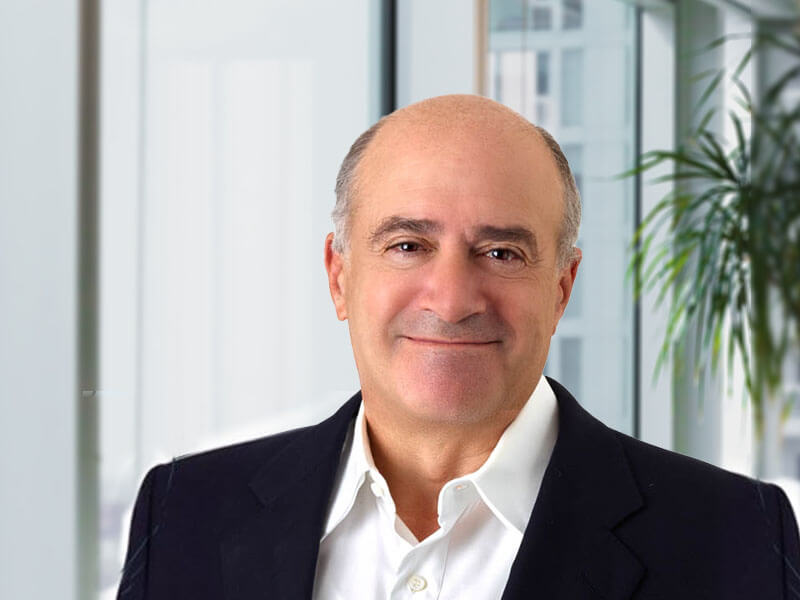
One of America's leading energy executives is retiring. John Rowe, arevered figure in the electric utility industry in particular, and energycircles in general, brought history and philosophy to the nuts-and-boltsworld of generation and transmission.Rowe, 65, who describes himself as an “industrialist,” has been a utilitychief executive for 28 years. Currently, he is chairman and chiefexecutive officer of Chicago-based Exelon Corporation. He will retireearly in January when the company's merger with Maryland's ConstellationEnergy is expected to go through.Rowe's demeanor and conversation are not those of a hard-driving,returns-oriented CEO — the type so loved by the business press — butthat of a man of letters. For he is that, too. He has a reverence for theEnglish language, a passion for history (including an intimateunderstanding of Byzantium) and a sprawling knowledge of the ancientworld.As utility executives enjoy only brief prominence (and that when the ratesgo up or the lights go out), Rowe has been a towering figure lost inplain sight, except to those who have been enriched by his management.During Rowe's tenure as CEO of the New England Electric System, CentralMaine Power and Exelon, the companies had a cumulative annual return of 13percent. An investor who bought $100 of common stock in the first companyand converted it into stock in the subsequent two companies, reinvestingall the dividends, would own stock worth about $2,900 today.At Exelon, where he has been in charge for nearly 14 years, Rowe has grownthe company through acquisition and efficiency. Exelon was formed from the2000 merger of PECO Energy Company and Unicom Corporation, which Roweheaded. The big merger has been hailed the most successful in U.S. utilityhistory.Rowe has revolutionized the operation of Exelon's nuclear power plants,pushing availability — a measure of when they are ready to produce or areproducing electric power — from 50 percent to 93 percent. At present,Exelon has 17 nuclear power plants, set to rise through acquisition to 22.Rowe has not built any new power plants, favoring for now much lessexpensive natural gas. Also, he has found that upgrading his existingnuclear fleet can produce the equivalent output of building new plant.Rowe came to Washington to give a speech on leadership Wednesday to theBipartisan Policy Center. He packed them in, the savants of the electricindustry. They included former power company heads, trade associationpooh-bahs, former regulators, think-tankers and journalists. They gotvintage Rowe: contrariness, wry humor, self-deprecation and a hint at thewonders of a well-stocked mind. In this case, his.Rowe has famously supported cap-and-trade for utility emissions. He pulledExelon out of the U.S. Chamber of Commerce when it opposed cap-and-trade.Also, Rowe does not believe the Environmental Protection Agency shouldcease to implement the Clean Air Act.About those management books that offer secrets to a business career, Rowesays he only favors two: Harry T. Williams's “Lincoln and His Generals”and Mark Twain's “Life on the Mississippi.”Rowe says you have to know your business as Twain's riverboat captainsknew the river. “I had got to learn the shape of the river in all thedifferent ways that could be thought of — upside down, wrong end first,inside out, fore and aft, and 'thortships – and then what to do on graynights when it hadn't any shape at all,” Twain wrote. “You have to know itin your hands as well as the potter knows his clay,” Rowe says.The kernel of Rowe's leadership philosophy: “Lead to a place worth going.”Rowe has extended that philosophy to his considerable civic and charitablework. Exelon's charitable giving to the communities it serves has grownunder Rowe's leadership, with corporate contributions to nonprofitorganizations topping $250 million for the years 2001-2010. Rowe and hiswife, Jeanne, established the Rowe Family Charitable Trust which hascontributed more than $16 million to charitable organizations focused oneducation, social services and culture in the years 2002-2010, includingco-founding Rowe-Clark Math and Science Academy and the Rowe ElementarySchool, two charter schools serving Chicago's disadvantaged neighborhoods.The Rowes and their family trust have also endowed numerousprofessorships, including architecture, Byzantine and Greek history andsustainable energy at the University of Wisconsin, virology at theMorgridge Institute and the Wisconsin Alumni Research Foundation, andCurator of Evolutionary Biology at Chicago's Field Museum.Utility Executive Rowe may be retiring, but Citizen Rowe is hard at it.Those lights will not go out. – For the Hearst-New York Times Syndicate
- no responses
-
-
-
Three for the Future: Water, Food, Energy
-
HOUSTON — This is not your father's energy crisis. Not by a long shot. Properly put, it may not even be a crisis but a race to avoid a crisis. Delegates gathered here for a conference on energy, organized by the World Energy Council and its American and Canadian chapters, heard about an energy world that has been transformed from the time of the gasoline lines of the 1970s to one that is squeezing abundant supplies of petroleum products from the earth, and an electric sector that is looking at an intoxicating array of new possibilities. Item: In the past three years, gas from previously unavailable tight shale formations, especially the Marcellus field, stretching from New York through Pennsylvania and down into West Virginia, has changed profoundly the outlook for U.S. energy supply. Plentiful gas has ended many schemes to import liquified natural gas and caused utilities to turn from an expected surge in nuclear power to a passion for gas. The race to avoid crisis rests on the belief that world population and its peaceful expansion rests on three interrelated pillars: water, food and energy. Normally planners look at these separately, but Cristoph Frei and Karl Rose of the WEC and Barry Worthington of the United States Energy Association share a common view that all three of these cardinal needs have to be taken together, and their impact on each other considered. Rose is preparing a study on the water needs of the energy sector going forward. He says these are enormous with an impact not always included in projections of water demand. Oil and gas in tight formations, oil sands and electric utility cooling towers are part of the future and strain the water equation; as do the obvious needs for water for agriculture, the largest user and, of course, potable water. Energy can solve or exacerbate the water problem, according to the energy savants. Item: Alstom, the Paris-based global engineering company is planning to build the mother of all wind turbines: a 6.5-megawatt offshore behemoth – the equivalent of an A380 Airbus, spinning atop a huge pole. Today's large wind turbines are in the 1.5-megawatt range. A new nuclear power plant comes in at 1,600 megawatts. Item: While nuclear is in retreat in Germany, Italy and Belgium, it is going ahead in Britain, central Europe, China and India. Jacques Besnainou of nuclear supplier Areva North America, insists that nuclear is still the cheapest form of electricity and the gateway to a whole new world of medicine. France reprocesses (or, as he says, recycles) its own nuclear spent fuel and that of other countries. Recycling is profitable for France as well as Areva. He wishes the United States had continued with recycling. Driving the rush for more energy is not only the world's voracious current consumption (approaching 90 million barrels a day of oil alone), but also the rising prosperity in Latin America and Asia. China and India, in particular, are sucking up oil and gas and furiously building electric power stations. An aspiring population demands water, quality food and energy. Item: Canada is exuberant about its oil sands and Alberta's ability to handle the environmental impact. Joe Oliver, Canada's minister of natural resources, estimates air pollution at 0.1 percent of the world's green house gas emissions. The resource is calculated to be equivalent to two-thirds of the reserves of conventional oil in Saudi Arabia. New sources of oil and gas have lifted, at least in North America, the gloom that has hung around energy production for decades. Even those who are facing market share loss to natural gas, coal and nuclear, sense there will be demand aplenty for both, as the energy for survival race heats up. Item: Even as the big three – water, food and energy – were being debated in Houston, the United Nations calculated the 7 billionth baby joined the world population. – For the Hearst-New York Times Syndicate - no responses
-