-
-
A Drug Goes Down in a Perfect Storm
-
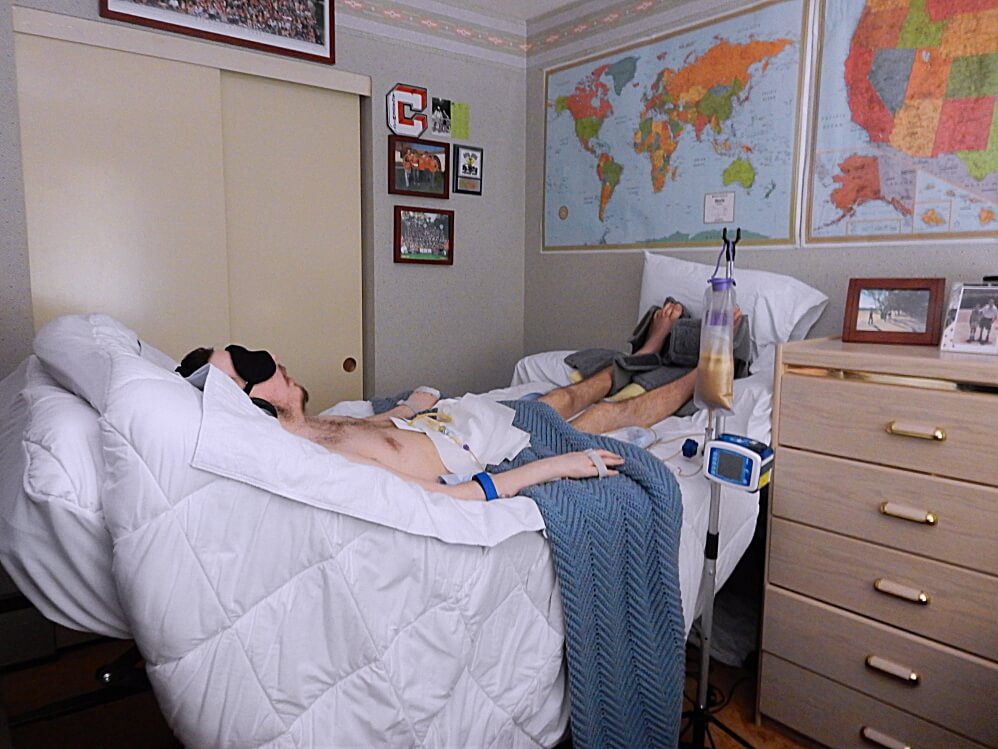
A man you have never heard of is on a hunger strike in Reno, Nev., in a desperate petitioning of the government to do something to help bring a drug you have never heard of to some very sick people.The man is Robert Miller, a former miner and bartender, who suffers from Chronic Fatigue Syndrome (CFS), also known as Myalgic Encephalomyelitis (ME). And the drug, which stimulates the immune system, is Ampligen.Miller and the drug are at the heart of a perfect storm involving bureaucratic procedures, corporate ineptitude and a community of patients who have no Washington presence and therefore no strident voice.Instead of a lobby, there are individuals — many of them very sick — who form a rag-tag pressure group, a small irregular army, who speak out on behalf of what is believed to be a million CFS sufferers in the United States.The problems start with the disease itself, which like AIDS is a dramatic compromise of the immune system. It is hard to diagnose: There are no biological markers; there is no way to quickly identify it. Instead, it is what doctors call a waste-basket diagnosis: If it is not any of a list of ailments, then it must be CFS.Some suffers report flu-like symptoms at the onset, building to a total collapse. Others simply collapse after exercise. Recovery is very rare — and only men. The disease undulates; good days and bad days, good years and bad years. In bad days and years, the victims are bedridden with intolerance of light and sound; restricted to bed and darkened rooms. Suicide is common, the suffering endless and severe.I have talked to dozens of sufferers — the most heartrending are the teenage girls who are denied schooling, social life and the prospect of marriage by their ghastly affliction.Enter Ampligen. It is an anti-viral compound developed in the 1970s and administered intravenously. Every patient is not helped by Ampligen, but many are restored to mobility after being bedridden. Robert Miller is one of these.Last December, the Food and Drug Administration (FDA) heard from more than 700 patients praising Ampligen, with accounts of the choice it presented for them between functioning or being dependent on others.Yet this month, the FDA rejected certification of the drug. The agency acknowledged the patient support, but castigated the company that makes Ampligen for incomplete data, a lack of scientific evidence of its efficacy and the way that it had handled the clinical trials.There is a more-in-sorrow-than-in-anger tone in the FDA’s rejection of application for the drug by its maker Hemispherx Biopharma, Inc. of Philadelphia.The FDA said: “As evidenced by the hundreds of letters, emails, and testimonies submitted to FDA, Myalgic Encephalomyelitis (ME) Chronic Fatigue Syndrome (CFS) is a devastating disease with a serious impact on quality of life. We are acutely aware of the seriousness of this disease, that no FDA approved treatments are available, and of the community's strong desire to see rintatolimod injection (Ampligen) approved.”The bottom line is that the patients are to be denied a drug which helps some of them. Dr. Daniel Peterson of Simmaron Research in Incline Village, Nev., estimates that 70 percent of his patients are helped. Dr. Nancy Klimas of Nova Southeastern University in Florida, a dedicated supporter, puts the success rate lower.For the patients, the dispute of methodology is irrelevant. What is relevant is that methodology has triumphed over humanity — and medicine.Miller is continuing his hunger strike in the hope that the National Institutes of Health can be persuaded to conduct its own trials as, they can and do sometimes. But even if they do, it will be years before the FDA will rule again. – For the Hearst-New York Times Syndicate
- no responses
-
-
-
Obamacare’s Silent Constituency
-
In the end, as so often, it all came down to one person. In this case Chief Justice John Roberts. He sided with the liberals enough to save the basic provisions of the Affordable Care Act.
In the tumult the wailing and the sighing, the gentlest of gentle sighs, inaudible to all but those who know, comes from the permanently sick, just-alive people who suffer from the immune system disease known as Chronic Fatigue Syndrome, called Myalgic Encephalomyelitis in much of the world. This is a disease little understood and under-researched, which it is believed afflicts 1 million Americans.
It is a disease that has no mercy. It is almost without exception a life sentence, robbing the victim of normalcy. Its symptoms include total collapse after exertion, especially after exercise; sleep that does not refresh; periods of months or years of being bedridden with pain from bones “that feel as though they are exploding,” according one victim, Lynda Haight; and a mental fog that makes the simplest task, like paying bills, too difficult many days. Other symptoms include extreme sensitivity to light, noise and normal city and suburban noise.
To this community of the lost, this cohort of hopelessness, Obamacare is a blessing; a small blessing but one that may grow in time when a cure is found, or at least when a therapy which relieves the suffering is developed.
These are the very people — sick, voiceless and hidden in in plain view – who have been shunned by insurance companies.
Those patients who contracted the disease in childhood have never been able to get insurance. They are the quintessential preexisting condition demographic. No room at Hippocrates Inn for them, even if they can afford it. Others have been dropped when they reach lifetime limits embedded in many policies.
Sadly, most of the expenses of those living this zombie life spend money not on being cured but being tested and using off-label drugs (drugs that are used for a purpose other than that for which they have been certified) in an endless search for partial, temporary relief.
Marly Silverman, a patient activist and director of PANDORA, a coalition of Chronic Fatigue Syndrome groups, said that had the Supreme Court decided otherwise, patients with chronic disease would have been forced back to uninsurable limbo.
For now, the apparent saving of Obamacare is a mercy for all the lifetime diseases. But it has a particular meaning for CFS sufferers because there is no easy diagnosis of the disease, and the patients often look quite well. It is a cruel irony that many CFS patients do not show signs ofbeing sick, so they are accused of sloth and malingering when they are as sick as can be.
Which is where the power of one comes in.
Women tell stories about devoted husbands — maybe the most famous being author Laura Hillenbrand’s. Also there are loyal wives who take up the burden, as in the case of Courtney Miller of Nevada, who is crusading for recognition for the disease that afflicts her husband Robert.
In other cases, lovers and spouses have taken the exits, leaving the prostrate to the additional suffering of loneliness and often poverty. Some sufferers are among the homeless. There many cases of victims living in cars and getting scant recognition or help from either the SocialSecurity Administration or doctors who take Medicaid patients.
John Roberts has become an important person in some very sad lives. For now he is the “one.”— For the Hearst-New York Times Syndicate
- no responses
-
-
-
Florence Nightingale Still Comforting the Sick
-
It is time to add May 12th to our list of dates worth commemorating — especially for 1 million in the United States who suffer from Chronic Fatigue Syndrome, also known as Myalgic Encephalomyelitis. This year marks 192 years since Florence Nightingale’s birth in Florence, Italy to wealthy English parents. As a young woman, she felt herself called to take up nursing. Later, her heroic work caring for wounded British soldiers during dark nights of the Crimean War earned her worldwide fame as "The Lady of the Lamp.” Nightingale is given credit for inventing secular and modern nursing because she recognized that troops were dying, not just from their untreated wounds, but also from malnutrition and dehydration. She followed up her war work by writing a landmark text for nurses and founding a training school in London. Her natural talent for numbers helped her keep detailed data on patients, and she ultimately won extra renown as a statistician. But from 1857 Nightingale found herself often disabled by poor health, which some suggest may well have been Chronic Fatigue Syndrome(CFS). As a result, Nightingale now has been adopted as a kind of patron saint by for this under-studied disease. CFS sufferers here and abroad (17 million) commemorate her birthday as a kind of rallying point; their own lamp in the dark. And the world of CFS is dark indeed — an abysmal place of unmediated pain, disability, hopelessness, financial ruin and sometimes suicide. One doctor told me that if she were to have to choose for herself between CFS and cancer, she would choose cancer. “At least for cancer, there are treatments; if they fail, you die. With CFS you are the living dead,” she said. Everything about CFS is controversial. It has been on the medical agenda since 1934, when there was an outbreak centered on a Los Angeles hospital. Currently 63 outbreaks have been documented, but still what is not known dwarfs what is known. What is known is that it is a disease of the immune system, related to and in some cases overlapping fibromyalgia, a disease of the muscles. It also involves the neurologic and endocrine systems. The disease has broken out in startling clusters – locations in Nevada, Florida, New York and California among others just in the 1980s. Its deadliness is slow and subtle. Studies suggest that it takes 20-25 years off the average sufferer’s life, but there are no dramatic sudden deaths or gory symptoms to attract attention. Expert virologists such as Columbia University’s Dr. Ian Lipkin agree that the disease may yet turn out to be viral. But the once-exciting report from the Whittemore Peterson Institute in Reno, Nev., targeting the XMRV retrovirus had to be retracted for faulty science. Doctors are slow to diagnose CFS because if that is not the area of their practice, there is no easy diagnosis. At present there are no bodily fluid tests, no imaging, no temperature transients. Nothing. Just very sick people; very, very sick people. Immune system studies, spinal fluid aberrations, and other biomarkers show promise and may be used to identify the disease some day. Probably 75 percent of CFS victims start with some flu-like disease. Maybe 4 percent of people who come down with mononucleosis will get CFS. Most sufferers' lives are turned upside down. Their first collapse comes without warning, usually following exercise. Although memory and verbal-skills loss are often part of CFS, most victims remember exactly the day and time they were stricken. Laura Hillenbrand, who incredibly has written two best sellers, cannot leave her home and could not attend her own wedding. Deborah Waroff, a New York writer has had CFS for 23 years. In September 2003 and all through 2004, she could do little more than lie on the living room couch. Waroff struggled back to the point of functioning a few hours a day. But two back surgeries in 2010 left her immune system at a record low level, and brought on another long-term collapse. She is back to two or three-hour spells of activity, but not on two consecutive days. “I've lost half of my adult life,” she says. These stories are multiplied a million times. Being a victim can include abandonment by families, spouses and lovers, friends and colleagues, workplaces and insurance companies. Florence Nightingale shone a light of hope from her lamp in the ghastly Crimean hospital wards. CFS sufferers hope that the spirit of Nightingale will shine a loving light into the darkness of their disease — lost as they are in plain sight of the world around them. – For the Hearst-New York Times Syndicate - no responses
-
-
-
CFS: One Disease and Its Costs
-
What would happen to health care if a million new patients with just one of many now incurable and largely untreated diseases flooded the system, relying on medicine that could cost $70,000?
It might happen. Actually, it's more than desirable that it should happen.In one instance, a million or more patients who suffer from the devastating, life-robbing disease known as Chronic Fatigue Syndrome (CFS), or myalgic encephalomyelitis, struggle through days of almost total incapacitation, disorientation, pain and despair, clinging to hope that science will rescue them. All that's known is that like AIDS, it's a disease of the immune system.The horror of this affliction is almost indescribable. I've been writing and broadcasting about these patients for several years and never have I seen such extended suffering, lives hollowed out, every tomorrow to be feared, the slightest departure from strict routines of inactivity to be met with punishing suffering.The mother of an afflicted teenager told me that for New Year, her daughter went out for amid celebration. That exertion cost her two weeks in bed.My friend and colleague (we host a YouTube channel, mecfsalert), Deborah Waroff, a New York-based writer, has been afflicted for 23 years and has seen her life confiscated. Like other patients she lives in a prison of her body with painful memories of when she was well. The body hurts, the memory tortures. Sleep does not refresh and long hours in bed do not heal.Sufferers, held together in their pain by the Internet, trade sad notes. Going the rounds now is Winston Churchill's statement in old age his life was finished but not ended. One sufferer e-mails me that she prays every night that she won't wake up in the morning.Patients groups say suicide rates are high. Determining the morbidity rate is a challenge because sufferers die from opportunistic infections rather than from CFS. In this, and other ways, it resembles AIDS and diabetes.So far, the burden has been carried more by families and loved ones than by the health care industry. This is because there is no diagnosis per se for CFS, and no cure.Dr. Andreas Kogelnik of the Open Medicine Institute in Mountain View, Calif., says there are no “markers” for the disease. There is nothing in the blood, marrow or soft tissue that identifies the disease.Therefore, diagnosing the disease is by elimination – a time-consuming undertaking that the present medical regime is ill-equipped to provide. “You can't do much in 10 minutes,” Kolgelnik says, referring to average amount of time allotted to patients by doctors.So this is a disease that, even without a cure, the medical establishment has already indicated that it cannot afford.The matter of affordability, for example, has affected diagnosis and treatment severely in the United Kingdom. There the National Health Service, always struggling with budgets, has encouraged doctors to teat CFS as a psychosomatic condition related to depression. The patients hate this and only recently has the British Medical Research Council softened its position.That other medical nostrum, diet and exercise, is favored in the UK, too, but not by patients. They write to me constantly pointing out that exercise is corporal punishment for them; a recipe for relapse.With only under-funded research scattered across the country at clinics and universities, the picture is bleak. But there are two pinpricks of light: a Norwegian cancer drug, Rituxan, which has helped patients in Norway and Germany, and a drug that is still in clinical trials in the United States, Ampligen, which rebalances the immune system.Even those who administer the drugs, like Dr. Derek Enlander in New York and Kogelnik in California, don't hail them as panaceas but as hopeful pacesetters. Neither is available except to a few patients in trials. And cost? Ampligen costs about $25,000 for a year of treatment, and Rituxan comes in at a whopping $70,000.A slew of other diseases await expensive cures. In the future health-care costs, no matter what the Supreme Court and the politicians do, are going to go up and up. To the sick and their families, any price is a small one.– For the Hearst-New York Times Syndicate - one response
-
-
-
Chronic Fatigue Syndrome: Lives Interrupted
-
In 2010, I made more friends than in all of my life. They are scattered across the United States and around the world. But for their sake, I wish they had never heard of me.
Sadly, my new friends know me only because I have taken up their cause. I have written and broadcast about their plight, and they have responded by pouring out their hearts to me.
For very minor service, I have received more gratitude, more praise and more life stories than from anything I have written or broadcast in five decades in journalism.
My sad, suffering new friends are victims of a grossly misnamed disease: chronic fatigue syndrome (CFS). It was once known more robustly as myalgic encephalomyelitis (ME), which at least suggests seriousness even if it isn't quite accurate. Myalgic describes pain in the joints and encephalomyelitis, inflammation in the brain and spinal cord. CFS has no known cure, and varies in intensity during the sufferer's lifetime.
In 1988, the Centers for Disease Control named the disease chronic fatigue syndrome after an outbreak in 1985 at the Incline Village resort on Lake Tahoe, Nev.
As far back as the 18th century there were recorded outbreaks of the disease, which was given various given names. In 1955, there was a major outbreak at the Royal Free Hospital in London.
The 300-case cluster in Nevada is generally recognized to be the largest in the United States. The second-largest cluster occurred in Lyndonville, NY, a northwestern hamlet where 216 cases were confirmed in a population of fewer than 1,000, also in l985.
A Lyndonville physician, David Bell, is regarded as one of the true experts on CFS, as well as one of the most dispassionate in the controversies that swirl around the disease. Bell has resisted pressure from both the medical establishment and patients' groups while retaining their respect.
As I see it, there are four controversies that plague discussion, research and therapies:
-
Is it a psychological disease with severe physical manifestations (a diagnosis favored by the British medical establishment)?
-
Is it caused by the new retrovirus XMRV (first spotted in prostate cancers) as some researchers believe, and nearly all the 1 million patients in the United States pray will lead to a cure?
-
Some charge there is a conspiracy in the medical establishment to downplay CFS out of guilt over past indifference, or pressure from the psychiatric practitioners who are reluctant to surrender jurisdiction.
-
Others fear a threat to the general population — clusters confirm CFS is contagious. But the pathway of the pathogen (air, blood, sexual intercourse, surfaces, food) or how great the risk is unknown.
Thanks to the Harvey Whittemore family — daughter Andrea Whittemore Goad has been a CFS sufferer since childhood — some serious, privately-funded research is being done at the Whittemore Peterson Institute (WPI) in Reno, Nev.
It is from this institute that the most compelling evidence of a retroviral role in CFS has originated. But recently, it has been refuted by British scientists who claim there was contamination in the tests, skewing the results.
Dr. Judith Mikovits of WPI rejects the British conclusions of contamination. She is very confident that she has found XMRV present in a majority of CFS patients, contending that she has used four methods of analysis against one in Britain.
Bell, the hands-on doctor from New York, told me he believes the virus is present. Yet only when XMRV is irrefutably proven to be to blame can the search for a cure take shape.
These are among issues that will be discussed on April 6-7 at a “state of the science” meeting at the National Institutes of Health in Bethesda, Md. But there is no expectation that anything very new will be revealed as the debate rages daily on the Internet.
Deborah Waroff, a gifted New York City author, former securities analyst and CFS sufferer for 22 years, tells the story of her first attack this way: “I have no idea how I got it. I had the symptoms of flu. After a week, thinking I was pretty well, I went back to my normal activities like biking and tennis. Then after a week, I was sick again. This repeated several times that summer [1989], until I got to a point where I was never well again. After a little activity, I would collapse, fold up.” Often, Waroff is bedridden, and nothing has improved permanently.
Her symptoms were classic; fever, dizziness, stomach upset, swollen lymph glands and frequent headaches. She developed cognitive problems such as putting the wrong words in sentences, known as dysphasia.
Waroff introduced me to my new friends and their terrible witness to suffering, abandonment and medical indifference. Their families break up, their spouses and lovers drift off. Infected parents worry for their children. One correspondent told me that they are the “unburied dead.” Others said they were “living in coffins.”
They have no celebrity spokesperson. They have no Washington lobby fighting for research dollars. They have no hope that a cure is just around the corner; and little confidence that government research organizations are trying hard enough, if at all, to find one. To know them is to peer into hell. – For the Hearst-New York Times Syndicate
-
- 17 responses
-