White House Chronicle

News Analysis With a Sense of Humor

  • Home
  • King’s Commentaries
  • Random Features
  • Photos
  • Public Speaker
  • WHC Episodes
  • About WHC
  • Carrying Stations
  • ME/CFS Alert
  • Contact Us

Entrepreneur Weir Says Kilowatts Need Liquidity To Be Banked, Traded Like Money

Chase Weir, Vice Chairman and CEO, Distributed Sun

March 16, 2026 by Llewellyn King Leave a Comment


Chase Weir isn’t easy to unpack. But it is an endeavor that is worth it.

Weir gives the impression of being a quiet, perhaps contained man. But when he talks, ideas flow, and particularly about the electricity supply ecosystem.

I spent the best part of two days at the University Club in Washington talking to Weir about electricity and how the current crunch might be ameliorated.

Weir differs from many who talk about the future supply of electricity. He has questions and answers.

He isn’t a theoretician; he has been engaged in the electricity supply challenges since the founding of Distributed Sun in 2009, where he serves as vice chairman and CEO.

Weir is also the founder and CEO of truCurrent, which was spun off from Distributed Sun last year with $37.5 million in working capital to facilitate microgrid and distributed energy deployments across the nation.

In 2008, he created a Washington-based nonprofit at the nexus of energy and natural capital, Earthshot Foundation, to which he has contributed major funding. It shouldn’t be confused with Prince Williams’s Earthshot Prize, which came over a decade later.

Weir, 53, rejects my suggestion that he is the scion of a patrician Memphis family with deep roots in music and American history. His family motto has been vero nihil verius (nothing truer than truth) for nearly a millennium.

His first business success was acquiring the company that invented instant-response technology to measure audience reactions to television, film, political and advertising content. Many of the movies and sitcoms we know and love were first tested at his theaters at the Academy of Television Arts & Sciences, and changed before they were distributed and broadcasted.

In a television interview, Weir told me he has been influenced by Robert Wright’s writing, particularly his 1999 book “Nonzero: The Logic of Human Destiny.”

Weir is driven by a philosophy that good society stems from abundant and intelligent systems rooted in societal wealth. And he believes smart, affordable electricity goes a long way to assuring economic security and prosperity.

While studying economics at the University of Memphis, Weir learned about intelligent system and discourse process design under Art Graesser, professor of psychology and intelligent systems. Later he studied management science at the University of North Carolina.

In the electricity sector, Weir is attracting attention not only from his business success, but also from his philosophical and systems approach to the grid and the electricity supply ecosystem. That approach is spelled out in three Forbes articles. He is a member of the Forbes Business Council.

The first of these posits that the grid is suffering from what Weir calls “kilowatt illiquidity.” He lays out a scenario where the grid should be compared to the financial markets — where liquidity is essential for business to survive and prosper.

“America is entering an energy moment that few business leaders fully appreciate or are prepared to meet. Demand is soaring as data centers and AI compute, EVs and electrification reshape the economy. Yet the grid that must power this growth is constrained by something deeper than congestion, cost or infrastructure delays. It is constrained by illiquidity,” Weir writes in his Dec. 18 Forbes article.

“If cash flow is the lifeblood of business, kilowatt hours (KWh) are the lifeblood of a modern economy and currently those KWhs are blocked, locked in place, trapped by time, geography, regulation and physical bottlenecks. We’ve built a system where electrons cannot move freely or be stored flexibly. They cannot be accessed on demand or treated like the currency they have already become.”

He declares,“This is the defining crisis of the grid: KWh illiquidity. Once you see it, you cannot unsee it.”

Weir says the grid is designed around the highest peak demand on days like when it is hot and air conditioning is running flat out. Instead, he says, liquidity can come into the grid if it relies to a much greater extent on the flexibility provided in distributed energy resources (DER).

He believes networks of flexible microgrids are the key to the future liquidity of the grid.

The tools, capital and demand, are at hand, and he has been successfully deploying them since the creation of Distributed Sun. Its customer base spans the gamut of use cases, from utilities that have needed to harvest their DER possibilities to a national foodservice company that has needed a series of microgrids across its service territories, to GWh-scale battery storage to facilitate interregional transmission.

It doesn’t matter whether the source is behind the meter, in front of the meter or a mixture, Weir tells me. Flexibility, availability and operational choice is the key, freeing the electrons for their highest-use value.

Utilities are warming to the idea of liquidity.

In that same Forbes article, Weir writes, “Utilities are beginning to adapt. Xcel Energy’s distributed capacity procurement model allows batteries and other distributed assets to be rate-based across circuits, effectively extending ‘banking hours’ on stressed infrastructure.”

Likewise, Weir writes, “PG&E’s flex connect program lets large customers connect EV fast-charging and grid-scale storage faster without costly upgrades. Think of traditional loads as cash and flexible loads as credit: utilities can constrain flexible loads during peaks while core demand continues to flow.”

His third article explores the mechanics of time, return-on-time and intentional design, and will be published later this month.

In Weir’s view, electricity is the currency and the grid is the marketplace. But the marketplace hasn’t yet taken advantage of the technologies, like storage, which will liberalize and make it efficient. It needs banking to make its wealth available.

Filed Under: King's Commentaries Tagged With: Chase Weir, Distributed Sun, electric grid, electricity supply, kilowatt illiquidity, microgrids, storage, truCurrent

Cyberattack on the Infrastructure Alarms Petraeus, Coats

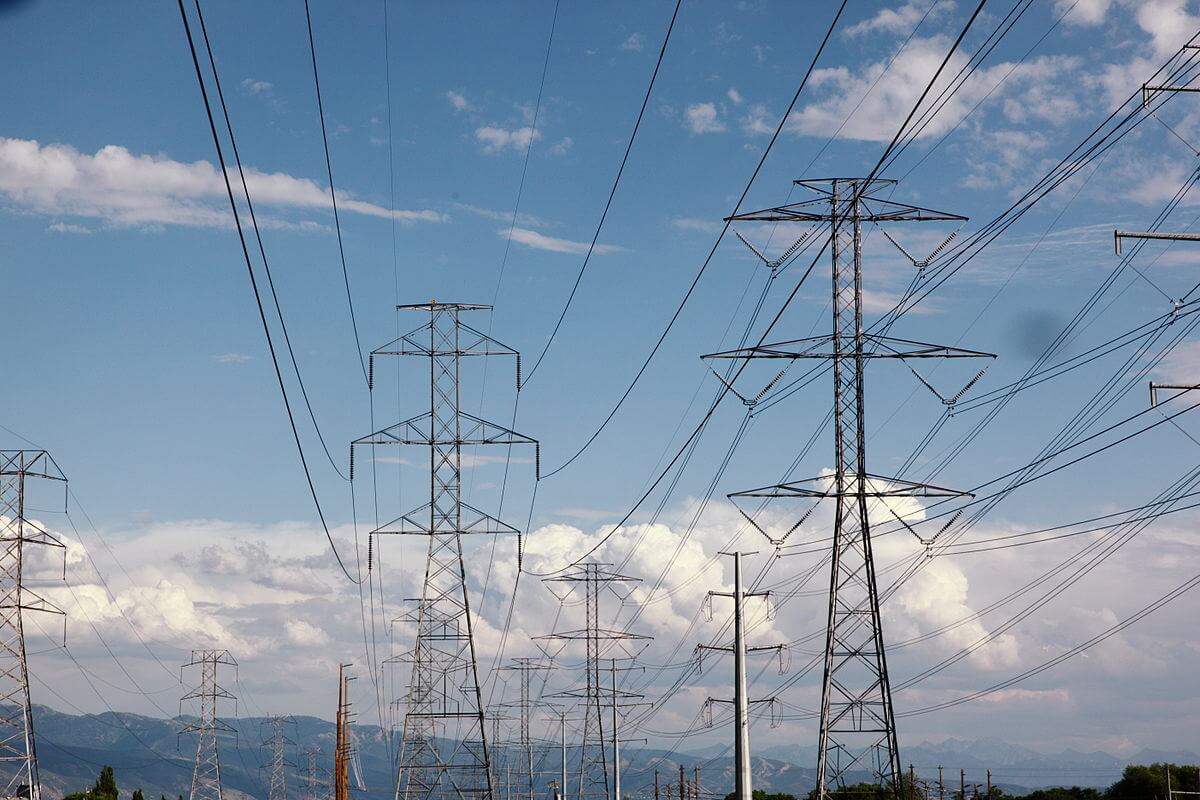
Electric power lines and pylons against a blue sky with clouds.

September 9, 2018 by Llewellyn King Leave a Comment

War always goes for the infrastructure: take out the bridges, cut off the electricity and water supplies. All that used to be done with artillery, tanks and bombs.

Going forward, it will be done by computers: Cyberwar.

Every day the early skirmishes — the tryout phase, if you will – are taking place. There are tens of thousands of probes of U.S. infrastructure by potential enemies, known and unknown, state and non-state. A few get through the defenses.

Jeremy Samide, chief executive officer of Stealthcare, a company which seeks to improve cyberdefenses for a diverse set of U.S. companies, sees the cyber battlefield starkly. He says the threat is very real; and he puts the threat of serious attack at 83 percent.

Jeremy Samide is chief executive officer of Stealthcare.

As Samide looks out across the United States from his base in Cleveland, he sees probes, the term of art for incoming cyberattacks, like an endless rain of arrows. Some, he says, will get through and the infrastructure is always at risk.

Director of National Intelligence Dan Coats issued a warning in July that the alarms for our digital infrastructure are “blinking.” He compared the situation to that in the country before the 9/11 terrorist attacks. The situation, he told the Hudson Institute in a speech, is “critical.” Coats singled out Russia as the most active of the probers of U.S. infrastructure.

Samide says probing can come from anywhere and Russia may be the most active of the cyber adventurers.

A common scenario, he says, is that the electric grid is target one. But considerable devastation could come from attacking banking, communications, transportation or water supply.

Retired Army Gen. David Petraeus, a former director of the CIA and current chairman of KKR Global Institute, in an article coauthored with Kiran Sridhar and published in Politico on Sept. 5, urges the creation of a new government agency devoted to cybersecurity.

Samide and others endorse this and worry that the government has much vital material spread across many agencies and not coordinated. Behind Petraeus’s thinking is one of the lessons of 9/11: Government departments aren’t good at sharing information.

Conventional wisdom has it that the electric grid is super-vulnerable. But Politico’s cybersecurity reporter David Perera, who consulted experts on the feasibility of taking down the grid, somewhat demurs. In a Politico article, he concluded that the kind of national blackout often theorized isn’t possible because of the complexity of the engineering in the grid and its diversity.

The difficulty, according to Perera, is for the intruder to drill down into the computer-managed engineering systems of the grid and attack the programable controllers, also known as industrial control systems — the devices which run things, like moving load, closing down a power plant or shutting off the fuel supply. They are automation’s brain.

Perera’s article has been read by some as getting the utilities off the hook. But it doesn’t do that: Perera’s piece is not only well-researched and argued but also warns against complacency and ignoring the threat.

John Savage, emeritus professor of computer science at Brown University, says, “I perceive that the risk to all business is not changing very much. But to utilities, it is rising because it appears to be a new front in [Russian President Vladimir] Putin’s campaign to threaten Western interests. While I doubt that he would seek a direct conflict with us, he certainly is interested in making us uncomfortable. If he miscalculates, the consequences could be very serious.”

Samide warns against believing that all probes are equal in intent and purpose. He says there are various levels of probing from surveillance (checking on your operation) to reconnaissance (modeling your operation before a possible attack). Actual attacks, ranging from the political to the purely criminal, include ransomware attacks or the increasing cryptojacking in which a hacker hijacks a target’s processing power in order to mine cryptocurrency on the hacker’s behalf.

The threats are global and increasingly the attribution — the source of the attack — concealed. Other tactics, according to Samide, include misdirection: a classic espionage technique for diverting attention from the real aim of the attack.

The existential question is if cyberwar goes from low-grade to high-intensity, can we cope? And how effective are our countermeasures?

Today’s skirmishes are harbingers of the warfighting of the future. — For InsideSources

Filed Under: King's Commentaries Tagged With: Brown University, cyberattacks, cyberdefenses, cybersecurity, Dan Coats, David Perera, David Petraeus, electric grid, electric utilities, Hudson Institute, Jeremy Samide, John Savage, Politico, Russia, Stealthcare, U.S. infrastructure, Vladimir Putin

When the Light Fails — Modern Society’s Weakest Link

November 3, 2017 by Llewellyn King Leave a Comment

Modern life has a woven-in thread of vulnerability that is peculiar to our times: electricity. It is the cardiovascular and nervous system of life across the world, more so in the Internet Age than even 30 years ago.

If the nation were to lose electricity, it would cause an instant and lethal paralysis that would go beyond inconvenience of the kind parts of New England have just experienced — and that left me charging my cell phone in my car.

Nonetheless, limited and scattered blackouts of the kind I have been caught in are a reminder of what alarmists (alarmists are unsettling, but not always wrong) have been warning. If there is no electricity, there is no light, no water, no sewage treatment, no gas and diesel, no heating and cooling — even gas and oil systems rely on electric pumps and fans. If such a blackout were sustained, slow death through starvation, or fast death through disease and armed gangs ravaging the cities and towns for food, would be the result.

A curtain-raiser is Puerto Rico. Just look to its agony: The mitigation is that there is help from the rest of the United States — imperfect and maybe inadequate, but still help.

In a national blackout, Canada and Mexico might be as affected, and the catastrophe would be complete.

Such a blackout — very unlikely but not inconceivable — is posited to come from a hostile power using a nuclear weapon targeting the special vulnerability that comes with electricity and computerization. The hostile power would not target cities, as in the past, but instead would detonate a nuclear bomb high in the atmosphere, creating an electromagnetic pulse (EMP), which would do the damage. It would cause destructive electric surges, fry electronics and render most things that support daily life in 2017 inoperable.

The phenomenon has been known since the earliest days of nuclear weapons development, during the World War II Manhattan Project. Atmospheric tests by both the United States and the Soviet Union in 1962 gave the world hard evidence. The new urgency comes because some believe North Korea would try such an assault as soon as it perfects its long-range intercontinental missile.

One of the people who takes the EMP threat seriously is nuclear proponent and public policy advocate Richard McPherson of Idaho. He has written to President Trump proposing that Puerto Rico become a test bed for an EMP-hardened electrical grid.

Engineers believe they know how to do this, but the cost would be prohibitive, according to experts I have interviewed at the Electric Power Research Institute and the Edison Electric Institute, respectively the research arm of the electric industry and its trade association.

Robin Manning, EPRI vice president of transmission and distribution infrastructure, says they are studying the EMPs and a progress report is expected in a few weeks.

To believe the North Korean theory, you have to accept that North Korea is run entirely by cartoonish characters like its president, Kim Jong-un, and that they wish to be destroyed in global retaliation, from Europe and even China.

A quieter and very knowledgeable voice comes from Siegfried Hecker, a former director of the Los Alamos National Laboratory. He has visited North Korea’s nuclear sites seven times and has seen some of their most secret installations, including their centrifuges. He has even been allowed to handle a container of plutonium, the raw material of thermonuclear devices.

In a speech at Brown University on Oct. 31, Hecker said that North Korean technology and science is very impressive, and the scientists and engineers running the nuclear program are not mad fanatics but very dedicated to their task. He does not see the small country as an existential threat to the United States, but it is a problem: a problem that must be tackled civilly, through conversation.

“We know nothing about this country and who controls their nuclear arsenal. We need to talk to them, and their denuclearization will come later,” Hecker said.

Meanwhile the long-term security of the electric system remains a national necessity, whether the threat is monster storms, cyberattack or EMPs.

Scott Aaronson, EEI executive director of security and business continuity, says a “holistic” approach for security, embracing all hypothetical disasters, not obsessing on one, is necessary.

The situation in Puerto Rico is not hypothetical. It is an American tragedy of enormous proportions here and now. It is also a frightening window into what can go wrong in this, the Electric Century.

Filed Under: King's Commentaries Tagged With: electric grid, electricity, power

The Uber Effect on Electricity

January 25, 2015 by Llewellyn King 1 Comment

Leon Trotsky said, “You may not be interested in war, but war is interested in you.” The same thing might be said about disruptive technologies.
The U.S.. electric system, for example, may not be interested in disruptive technology, but disruptive technology is interested in it. What Uber and Lyft have done to the taxi industry worldwide is just beginning to happen to the electricity industry; and it could shock consumers – particularly the less affluent – as surely as though they had stuck their finger in an electrical outlet.
The disruptive revolution is not only happening here, but also in Europe, as Marc Boillot, senior vice president at Electricite de France (EDF), the giant French utility, writes in a new book.
Ironically, here in the United States, disruption of the otherwise peaceful world of electric generation and sale last year was a bumper one for electric stocks because of their tradition of paying dividends at a time when bond yields were low.
The first wave of disruption to electric generation has been a technology as benign as solar power units on rooftops, much favored by governments and by environmentalists as a green source of electricity. For the utilities, these rooftop generators are a threat to the integrity of the electrical grid. To counter this, utilities would like to see the self-generators pay more for the upkeep of the grid and the convenience it affords them.
Think of the grid as a series of spider webs built around utility companies serving particular population centers, and joined to each other so they can share electricity, depending on need and price.
Enter the self-generating homeowner, who by law is entitled to sell excess production back to the grid, or to buy on the grid when it is very cold or the sun isn’t shining, as at night. The system of selling back to the electric company is known as net metering.
Good deal? Yes, for the homeowner who can afford to install a unit or lease one from one of a growing number of companies that provide that service. Lousy deal for the full-time electricity customer who rents or lives in an apartment building.
There’s the rub: Who pays the cost of maintaining the grid while the rooftop entrepreneur uses it at will? Short answer: everyone else.
In reality, the poor get socked. Take Avenue A with big houses at one end and apartments and tenements at the other. The big houses — with their solar panels and owners' morally superior smiles — are being subsidized by the apartments and tenements. They have to pay to keep the grid viable, while the free-standing house – it doesn't have to be a mansion — gets a subsidy.
It's a thorny issue, akin to the person who can't use Uber or Lyft because he doesn't have a credit card or a smartphone, and has to hope that traditional taxi service will survive.
The electric utilities, from the behemoths to the smallest municipal distributor, see the solution in an equity fee for the self-generating customer's right to come on and off the grid, and for an appreciable difference between his selling and buying price. Solar proponents say, not fair: Solve your own problems. We are generating clean electricity and our presence is a national asset.
EDF's Boillot sees the solution in the utilities’ own technological leap forward: the so-called smart grid. This is the computerization of the grid so that it is more finely managed, waste is eliminated, and pricing structures for homes reflect the exact cost at the time of service. His advice was eagerly sought when he was in Washington recently, promoting his book.
While today’s solar may be a problem for the utilities, tomorrow’s may be more so. Homeowners who can afford it may be able to get off the grid altogether by using the battery in an all-electric car to tide them over during the sunless hours.
The industry is not taking this lying down: It's talking to the big solar firms, the regulators and, yes, to Elon Musk, founder of electric-car maker Tesla Motors. He may be the threat and he may be the savior; those all-electric cars will need a lot of charging, and stations for that are cropping up. There’s a ray of sunshine for the utilities, but it's quite a way off. Meanwhile, the rooftop disruption is here and now. — For the Hearst-New York Times Syndicate

Filed Under: King's Commentaries Tagged With: disruptive technology, electric grid, electric utilities, Electricite de France, electricity, King Commentary, Lyft, Marc Boillot, net metering, smart grid, solar power, Uber

The Pickens and Obama Energy Plans: How Smart Are They?

March 13, 2009 by White House Chronicle Leave a Comment


The billionaire T. Boone Pickens and President Barack Obama have something in common: a plan for saving us from imported energy. In doing so they hope to reduce air pollution, create jobs and head the country towards a more sustainable energy future.

But Pickens and Obama do not have the same plan. In fact, Pickens has been critical of Obama’s plan; and Obama has been silent on Pickens’ plan.

Where both plans converge is on the billions of tax dollars that will be needed to upgrade the now ramshackle transmission system. This is often called the grid. The fact is it is not a grid at all, but a series of local grids that are sometimes interconnected. Texas is not connected to the rest of the U.S. system, for example.

The first problem with the two plans is that they are aimed specifically at foreign oil but deal with electricity, which we import in small quantities from Canada. Electric imports are not a problem. Both have ideas about how a greener, smarter electric grid will help toward cutting the astonishing amount of oil–20 million barrels a day–we consume in the U.S., 70 percent of it from overseas.

The Pickens plan is fairly straightforward. He wants to build wind farms up the spine of the United States, from Texas to Canada–hundreds of thousands of windmills in the best wind belt in the country. This electricity will be transported from the relatively underpopulated Intermountain West to the heavily populated coastal cities of the East and West.

This electricity would be moved on the new smart grid that everyone is sure is desirable, and on the way if the government foots the bill and there is enough use of eminent domain to force the new lines across private property. One of the reasons the grid is not larger and more flexible today is that it often takes as long as 20 years to overcome the local protest and litigation. Even the abusive use of eminent domain does not block lawsuits over issues like the health effects of large power lines.

To Pickens, this electricity will make it possible to back out the 30 percent of natural gas now being used to generate electricity; and that resource will substitute for oil in large trucks and eventually domestic autos, after the new filling stations are built.

Neat, huh? Maybe in 25 years?

Obama’s plan is more ambitious, but less specific. It seeks a huge increase in wind generation; the use of solar panels in cities; and, of course, the building of a really smart grid, which will give consumers the option to turn off their appliances when electricity is expensive and back on when it is cheap, mostly late at night and early in the morning–midnight suppers and 3 a.m. showers. The relief from imported oil comes in the use of electric cars, hybrid cars and possibly the electrification of some rail lines, where high-speed trains are envisaged.

Under the Obama plan and with his grid, your house will be monitored 24 hours a day for energy usage and it will get helpful directions on energy conservation. Ergo if you are growing plants in the basement, you might not want to sign up. Privacy is an issue. Also, will we go smart? Those who cannot program their VCR might want to dodge the smart grid.

There will be winners and losers. The winners will be the equipment manufacturers (lines, poles, meters, wire, insulators, turbines), civil engineers and, of course, lawyers and consultants. The losers? If the scheme collapses under its own grandeur, it will be taxpayers; job-seekers and ultimately the environment, if the utilities keep burning coal for more than half of their production. If the windmills are built under either scheme, birds and bats will get it. Both species are already slaughtered by the tens of thousands by flying into wind turbine blades.

While gasoline is cheap, the lights are on and the thermostat is set either too low or too high, it is going to be hard to tell people they have to change–and pay for it.

Filed Under: King's Commentaries Tagged With: electric grid, energy, President Obama, T. Boone Pickens, wind power

White House Chronicle on Social

  • Facebook
  • Twitter
  • Vimeo
  • YouTube
Microgrids Offer Community Solution to Electricity Challenge

Microgrids Offer Community Solution to Electricity Challenge

Llewellyn King

You may have heard of microgrids in passing, maybe at a town meeting or when the future of your electricity supply is under discussion. Mostly, they aren’t headliners like data centers. However, microgrids are becoming an important part of the future electric infrastructure. They provide a valve to release some of the pressure building up […]

The Collision Between Money and News — We Lose

The Collision Between Money and News — We Lose

Llewellyn King

Trillions, as in trillions of dollars, are being bandied about in the way millions were, then billions. But take a look at 1 trillion expressed numerically: 1,000,000,000,000. Awesome, isn’t it? Twelve zeros. The national debt stands at $39 trillion, and the interest on that will top $1 trillion this year. Very soon, the first trillionaire […]

AI Is Interested in You, So You’d Best Be Interested in It

AI Is Interested in You, So You’d Best Be Interested in It

Llewellyn King

AI is everywhere. It is now affecting how people do their jobs and those jobs themselves. The future is clearly with those who have found a way of making themselves indispensable by using AI, and not with those who resist or actively fight it. You may not be interested in AI, but AI is interested […]

The Woman Behind Trump’s Overnight Truth Social Raging

The Woman Behind Trump’s Overnight Truth Social Raging

Llewellyn King

President Trump’s press secretary, Karoline Leavitt, likes to say that his administration is the most transparent in history. Possibly, she is right. That is, if you think letting it all hang out is the kind of transparency Leavitt has in mind. Certainly, it all hangs out in a way we have never seen in Washington. […]

Copyright © 2026 · White House Chronicle Theme on Genesis Framework · WordPress · Log in