The people of the world are planning to descend on Europe this summer. Not, I hasten to say, as migrants but as tourists.
They will jam the sidewalks of Paris, their buses will be bumper-to-bumper in England’s Lake District, and it will be nigh impossible to get into Venice.
It isn’t that Europe is too small to accommodate the surge of tourists but that a few sights are too popular with tourists from the West and now tourists from China. The history and culture of Europe are a magnet, drawing and delivering for tourists, whether they are first-timers or bucket-listers.
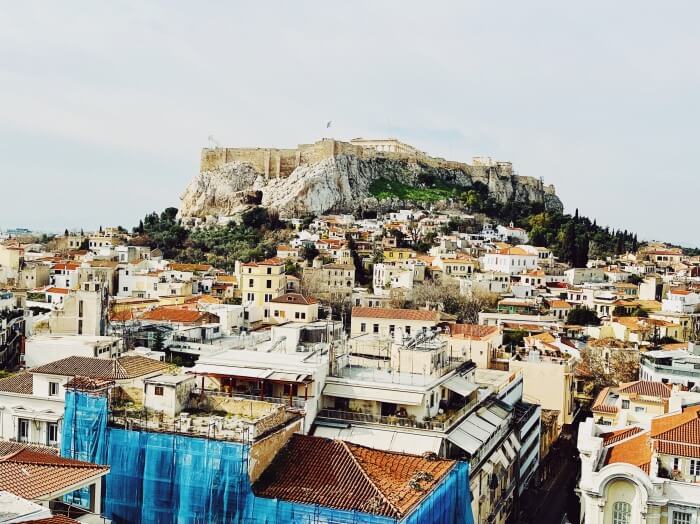
Greece is a jewel in this crown, a place of sparkling wonder of human endeavor and natural formations. The country is ground zero for Western civilization, where visitors can trace the origins of Western arts and sciences, as well as democracy. Visitors can also experience the natural beauty of its coasts, mountains and islands.
I met with the Greek minister of tourism, Olga Kefalogianni, in Athens last month, and we discussed the blessings and challenges of tourism, including the problem of what some call “overtourism.” Not only has Greece attracted tourists for millennia, but it also has a huge capacity to absorb visitors. It would just like to spread them out over the year and the country.
Clearly, Kefalogianni loves her job and was, to an extent, born to it. She is the scion of a very prominent Greek family that owns hotels in Crete, the largest and one of the most inviting of the Greek islands.
The last thing Kefalogianni, who did a stint as a lawyer in New York, wants to do is to discourage tourism. It accounts for 20 percent of Greece’s economy, and the country can absorb untold hundreds of thousands more tourists than it already does.
But there are choke points. And in future planning, the minister told me, she is working to enhance the industry by promoting Greek food, wine and its wide-open spaces for safe outdoor recreation like hiking, climbing and canoeing.
The first thing, she said, is to tell the world how diverse Greece is and how much it has to offer not only in terms of its history but also natural beauty and simple things like walking in its villages.
She wants visitors to spread out and enjoy all of Greece. “Do you know you can ski in Greece?” she asked me. Indeed, the country has 25 ski resorts.
She also said Europe has much to offer year-round besides the summer. In truth, the summer in southern Europe can be extremely hot.
One challenge for the Mediterranean ports is the cruise ships, which are now to be found all over the sea: vast, floating cities with eager sightseers, keen to disembark and spend a few hours in a destination.
They are becoming a challenge for host countries. They dock and disgorge their eager passengers, but they bring problems, from pollution to stressed port infrastructure. Also, the cruisers are ashore so briefly that they spend very little money, considering how many there are: Many prefer to eat all their meals on board, and their principal expenditure is on souvenirs and bus tours.
The cruise ships need more regulation, Kefalogianni said. Recently, I observed the problem firsthand. I — yes, on a cruise — fetched up in Santorini when five other huge ships did likewise. A cable car (or foot or donkey) at the port takes people up and down from Fira, the island’s capital. Well, with thousands in line, the result was chaos. Instead of a visit to a heavenly place, it was a version of hell.
Also, Greece and other European countries’ cities want the ships to base at their ports, provision there, and embark and disembark their passengers there. The beneficial economic effect would be greater that way.
The tourism minister wants visitors to know that Greece (and I would add the rest of tourist-haven Europe) has year-round attractions. She noted that the shoulder seasons of spring and fall offer all the summer attractions with fewer people. On the mainland and on the Greek islands — there are 6,000 of them; 227 are inhabited and 100 have more developed tourism facilities — you can swim early in the year and late as well. In February, I saw people swimming at a beach near Athens. They allowed the water to be cold, but not impossibly cold.
Mediterranean Europe is a place for all seasons. As the British writer Christopher Hitchens told me once, “It’s where it all began.”