-
-
Merkel Finds German Engineering not Good Enough for Nuclear
-
Question: What is Germany most famous for these days? Answer: engineering.
In light of the worldwide respect for German engineering, precision and management, why has Chancellor Angela Merkel taken up arms against her most admired national talents?
For that is what she has done in turning Germany against its nuclear future — a future she endorsed last fall. She has closed seven reactors permanently and has the 10 others set to cease operating sequentially by 2022.
Ostensibly, she has taken this draconian action in light of the Fukushima-Dai-ichi crisis in Japan; but more especially because her conservative-led Christian Democratic Union party and its coalition members have taken a drumming from the Green party in local elections.
Since the Japanese crisis, the German Greens have mobilized large anti-nuclear demonstrations throughout Germany. Indeed, the party was formed immediately after the Three Mile Island accident in Pennsylvania in 1979. Since then it has been a force to be reckoned with in German politics — always there, but sometimes more vocal than others.
To German commentators, Merkel’s about-face speaks of just one thing: opportunism. Fearing the dissolution of her fragile coalition, she gave the Greens what they wanted: complete surrender on the nuclear issue.
While buying a political-life extension, Merkel has cast a shadow over Germany’s future as the economic engine of Europe. Without nuclear, Germany will face severe economic and even environmental challenges ahead.
Merkel says that the nuclear slack will be taken up by boosting its renewable energy sources – wind, solar and hydro — from 17 percent of the mix today to double that. Nuclear has been providing 25 percent of German electricity. It would take about 20,000 windmills alone to replace that.
Also, Merkel says, electricity consumption will be cut by 10 percent.
Quite how any of this will be achieved is uncertain. Already, conservation is a high priority in Germany and alternative energy has been a high priority for years.
Most likely there will be electricity shortages in parts of the country, mostly in the south; there will be more brown coal burned; and Russia will further extend its energy hegemony over Northern and Eastern Europe by upping the amount of gas provided to Germany for electricity production. Another ironic likelihood is that as Germany will have to import more electricity and it will have to do so from countries with a large nuclear base like France.
The three German utilities that own various nuclear plants are in a state of shock, even disbelief. One, Eon, already is talking about billions of euros of compensation for loss of business and capital goods. The others are likely to follow suit. There is likely to be litigation in the German and the European courts.
Early polls show that while the German people do not want nuclear, they also see the Merkel move as political and cynical. One poll found that 70 percent of the electorate found the chancellor’s actions to be opportunistic.
First calculations, not denied by Merkel’s administration, expect electricity prices – already among the highest in Europe – to bound by nearly 20 percent.
The untold damage is to the concept of the invulnerability of German engineering – that something special that has made German cars the gold standard of the world. If Germany does not believe that it can engineer its reactors to levels of safety and manage them with Prussian zeal, then what has happened to the German ethic?
Brown coal — the dirtiest there is, being somewhere between bituminous coal and peat in its makeup — is the default position in German energy. Dirty to burn but plentiful, it may now make a comeback with severe environmental consequences for Germany and its neighbors.
When Merkel talks about alternatives, she is really talking about wind and at thousands more turbines will now have to be added in a country with limited land area for diffuse energy sources.
Although the Germans have been more successful than thought possible with solar, it remains a cold, gray northern country that requires a lot of reliable affordable electricity to keep its place in the global economy. Merkel appears to have put her own future above that of her country. –For the Hearst-New York Times Syndicate
- 4 responses
-
-
-
When the Environmental Remedy Is the Problem
-
In the Dr. Dolittle children’s books, written by Hugh Lofting, there appears a strange creature called the pushmi-pullyu. It is a gazelle-unicorn cross with two heads (one of each) at opposite ends of its body. Push-pull is its problem.
One might have thought that the lovable creature, featured in two movie versions of the classic series, might have been interred with it inventor. Alas, no. It has been seen around the White House, haunting many of President Obama’s policies — stimulate and cut; withdraw and fight on (Afghanistan); propose and abandon (Guantanamo); and not least the mixed signals he sends on energy, especially nuclear energy.
Obama often endorses nuclear power, but he has frustrated its development in the United States, and wasted $10 billion, by reversing longstanding U.S. policy at Yucca Mountain in Nevada. After exhaustive scientific analysis, and some of the best civil engineering on earth, he came out against Yucca in his presidential campaign. The nuclear waste repository is being abandoned without an alternative site. Not having one makes nuclear a harder sell to the public.
Now there is fear throughout the electric industry that the energy-loving administration is about to deal a body blow to the energy generators.
The Environmental Protection Agency (EPA) is about to issue a rule that would force more than 400 hundred electric-generating plants, along with other industrial entities, which use river, bay or ocean water for cooling, to abandon decades-old practices and build expensive, unsightly cooling towers. The nuclear operators, in particular, feel vulnerable because environmentalists often attack nuclear power in roundabout ways.
The legal challenge to using river and bay water goes back to the Clean Water Act of 1972, as amended, which, in the event of industrial use of water for cooling demands the use of “best available technology” to reduce the impact marine life, especially fish.
EPA is on the threshold, somewhat delayed, of publishing new regulations which it is believed will force nuclear power plants using once-through cooling to abandon it and install cooling towers. Pressure on the agency to revisit the seemingly settled, once-through practice in plants has come as a result of pressure from the Waterkeeper Alliance, Riverkeeper and other water-use advocacy groups.
According to the Nuclear Energy Institute, a lobbying group for nuclear power, it would cost $95 billion to build all the requested cooling towers.
Nuclear groups feel they are most vulnerable because of the longstanding opposition to nuclear power by many environmental groups. If the economics of the times preclude backfitting many cooling towers, the threat that new plants will be forced backward is very real.
But some observers believe that the defenders of waterways may be hoisted this time on their own petard.
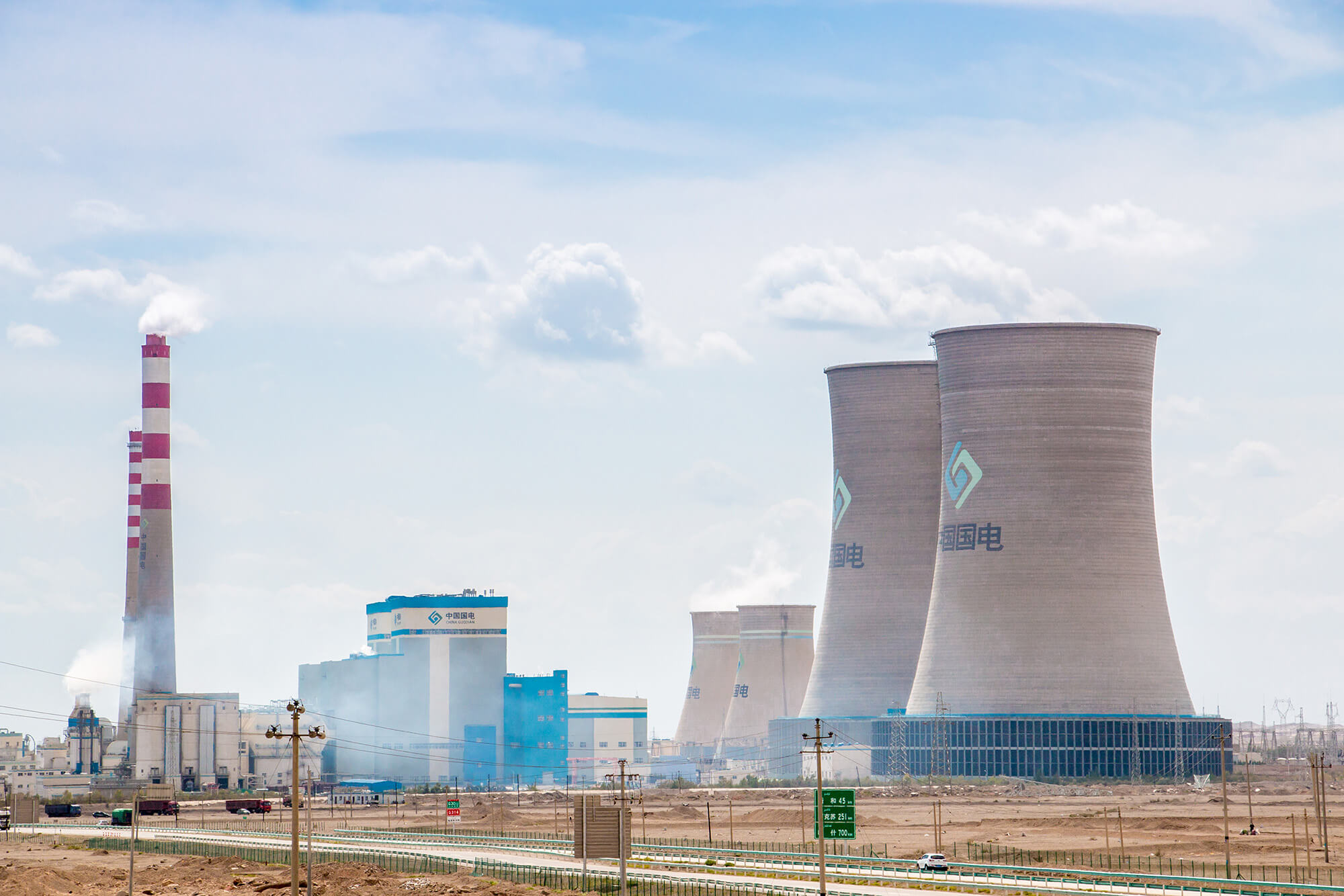
Cooling towers are those giant structures of the kind shown around the world at the time of the Three Mile Island accident. They are also employed by other power plants, mostly coal-burners. And they are very old technology.
Over the decades, the engineering of water intakes has evolved from a simple, large pipe with a screen on it to complex layers of baffles and other devices to keep fish in the main stream of a river and away from away from the intakes. Other devices involve lights, music, and a conveyor which returns the fish to their habitat in buckets on a wheel. Another solution is to sink wells under the surface of the water, pumping only water which has been screened naturally by the bottom of the waterway and is free of fish and most microbial life.
In short “best available technology” may now be at the intake, not in the towers which embody technology dating from the 1920s.
Also, towers present an environmental problem. In their vapor clouds they distribute all the impurities that might be in the water, including heavy concentrations of salt. At the Indian Point nuclear plant on the Hudson River in New York, the plumes the proposed cooling towers will contain some sea salt and river impurities, the operators claim. Worse the operators claim, the visual impact on the beautiful Hudson Valley will be unacceptable.
There is an irony here: For a long time, the cry “not in my backyard” belonged to the environmentalists. Now it can be heard from local communities, like Buchanan, near the Indian Point nuclear plant.
The worm may be turning; but nonetheless, the utilities fear EPA and the years of litigation and expense which is at hand. – For the Hearst-New York Times Syndicate
- no responses
-
-
-
Cautious Obama is Hurting Future Oil and Electricity Supply
-
From somewhere–inside the White House or the Department of Energy–President Obama is getting some pretty awful advice. It’s bad enough that he’s been persuaded that there’s a Nirvana Land of windmills and sunbeams in the future of electricity. But much more gravely in halting drilling in the Gulf of Mexico, he’s committing a fearsome folly.
If exploration and drilling in the Gulf doesn’t resume and gets caught up in punitive new rules, Obama, or his successor, will find the price of gasoline high (probably more than $5 a gallon) and military action against Iran will be proscribed.
It goes like this: After 18 months the supply of replacement oil from the Gulf dries up, due to the normal decline in production from old wells. Very soon, this loss exceeds 1 million barrels a day and begins to increase the world oil price,
World oil production today is 86.5 million barrels per day; of this, the United States gulps down an amazing 20 million barrels per day. This delicate balance, helped by the global recession, keeps the price bouncing between $70 and $80 per barrel.
Worst case is not only do we lose production in the Gulf, but any global upset–such as military action in Iran–will stress this oil production-demand balance further. Result: price rises. Political solution: none.
The folly of the Obama action is that every new hole drilled in deep water is going to be safer-than-safe.
There’s a well-known pattern: Disasters produce an aftermath of safety. The nuclear industry thought it was safe before the Three Mile Island meltdown, but it went back to the drawing board and produced new institutions for safety monitoring and study, as well as revised the very idea of defense in-depth.
The Obama caution is the danger, not the possibility of another spill.
The second energy disaster in the making is with electricity. The Obama administration has signed on to a vague idea, pushed by environmentalists and post-industrial schemers: It goes by the appropriately loose title of “alternative energy.”
In real-world terms, alternative energy can be narrowed to some solar
and wind. In fact, the only mature technology is wind. It works fine when the wind is blowing. The heat wave in the Eastern states in the past week makes the point: The wind doesn’t blow when it’s most needed.
There’s nothing wrong with wind, except that its most passionate advocates often favor it not for its own sake but for what it is not: nuclear power. Paranoia over nuclear power–always the first choice of the world’s utilities, if all things are equal–is a part of the cultural-political landscape in America.
Faced with this, the Obama administration has saddled up two horses and invited the nuclear industry to ride both as they diverge. It has thrown away the $11 billion spent on the first national nuclear-waste repository at Yucca Mountain in Nevada, even as it has offered loan guarantees for new reactors.
Coming down the pike is a surge, a really huge surge, in electricity demand as plug-in hybrid cars and pure electric cars are deployed.
The plan–if you can call it that–is that the load of new uses will be spread by “smart meters” on the “smart grid,” and this will direct or coerce consumers to charge their cars in the middle of the night.
Fat chance. If consumers were that financially or morally conscious, they’d long since have cut their electric loads and driven smaller cars.
Want to be politically unpopular? Start telling people when they can refuel their cars. That’s known around the Tea Party circuit and elsewhere as government intervention.
Do you take yours with sugar? –For the Hearst-New York Times Syndicate
- 7 responses
-