-
-
Nuclear Power’s Undeserved Bad Year
-
The great event of the nuclear calendar for 2011 was the earthquake and tsunami that hammered three reactors at the Fukushima Daiichi plant in Japan.
If you are a nuclear power believer, these sturdy old machines proved their mettle. They withstood all that nature could throw at them; although terrible damage resulted from the loss of external power and the swamping of the emergency diesel generators. The result was core melting and trouble in the used fuel storage pools.
If you are doubtful about nuclear power, or you are simply a political opportunist, this event was the final nail in the coffin, the proof that the end had arrived. For you, it provided more evidence that nuclear power
is inherently unsafe and that its use, as American scientist Alvin Weinberg once said, is a Faustian bargain. (It was a remark that Weinberg wished he had not made and which his staff and supporters tried to justify by explaining that in the German legend, Faust finally gets his soul back, having foolishly pledged it to the devil.)Such nonsense aside, the extraordinary thing about Fukushima is that although almost 25,000 Japanese died as the result of the earthquake and tsunami, no one died directly from the nuclear accident or from the
release of radioactivity. The buildings and containment structures survived as they were designed to 40 years ago. This, despite a wall of water 45 feet high with incalculable force.Each year, thousands of people are killed in coal mine accidents around the world. In 2010, 2,433 people were killed in China's mines, the world's deadliest.
Yet it was nuclear that had the world holding its breath. As with all accidents or even incidents, nuclear is held to a standard of safety orders of magnitude stricter than is applied to any other industrial activity, including other big energy undertakings, like oil refining, chemical production and transportation, and aviation.
The suspicion that falls upon nuclear technology is not only unfair – it is uneven.
The peace has been kept for five decades by the U.S. nuclear navy. In home waters and ports, nuclear ships and submarines sail without criticism.
Even the two organizations which appear to make their livings from relentless attacks on nuclear, the Union of Concerned Scientists and the Nuclear Information and Resource Service, have not dared to attack the nuclear navy. They do not protest, say, the USS Enterprise, when the great aircraft carrier sails blithely into domestic ports with eight reactors at work.
No one raises issues of waste, terrorist attacks or the consequences of military action. Those who make a living out of opposing nuclear power do not have the temerity to go after nuclear propulsion in warships. The
public would not tolerate the disarmament that that would entail.So the opponents go after nuclear's soft underbelly: civilian power. It is hard to imagine that it is more dangerous to operate a nuclear facility built to be safe on land than one built for war-fighting on the high seas
and in ports and harbors.There are times in history when triumph is recorded as failure. The British and the Prussians finished off Napoleon in the Belgian town of Waterloo. But in the English Language, “Waterloo” — a British victory –
is a synonym for catastrophic defeat. Americans believe the Tet Offensive was the turning point in the Vietnam War, even though the combined forces of the Viet Cong and North Vietnamese Army were roundly defeated by U.S. and South Vietnamese forces.Fukushima, a once-in-history accident, was a victory of design and construction for its time. Even the radiation releases are now found to be lower than expected, even those in the exclusion zone are surprisingly low. Despite eager attempts to find a surge in new cancers around the plant, none has shown up.
The lessons are to incorporate more passive features, better power supply and to protect the emergency generators. Newer designs already incorporate
some of these features — and all will going forward. The industry has reacted with unusual alacrity in the past to new lessons, something uncommon across the broad range of industrial endeavor from aircraft to automobiles. As with aviation, nuclear safety is always a work in progress, a striving.To my mind, after 40 years of chronicling nuclear power, the industry makes a mistake in rushing to advertise the safety of nuclear power plants. That way the seeds of doubt are sown.
Aircraft makers learned that lesson back in the 1930s. They learned that the trick was to shut up and do better.
If nuclear plants are unsafe, they should be closed down. Now. Today.
If not, their virtues should be trumpeted. Now. Today. Where are the trumpets? – For the Hearst-New York Times Syndicate
- 5 responses
-
-
-
In Nuclear, U.S. Is Still the Gold Standard
-
In nuclear industry parlance the “gold standard” has special significance and there is real concern the world may slip below that standard as the U.S. industry falters.
Gold standard is the term applied globally to the U.S. regulation and licensing of nuclear power plants. It is a term of respect for American standards of excellence. It was widely used at a meeting of the Nuclear Infrastructure Council in Washington Tuesday and Wednesday; and surprisingly, coming from French and Chinese lips, was an affirmation of the whole licensing and regulatory apparatus that exists in the United States.
The fear is that as the United States lags in the construction of reactors and while it continues to eschew fuel reprocessing, the gold standard will lose its luster to a world that is building new nuclear at breakneck speed and is, or plans, to reprocess the used fuel.
Most of today’s concern is about China, now committed to the fastest growth in nuclear. But India is also building and others like the United Arab Emirates, Jordan, Brazil and Argentina are thinking about it.
Will a deterioration in the quality of construction, regulation and operation occur? Not if the gold standard continues to be respected and reflects the latest innovations, according to industry sources in Europe and America. Otherwise, a slew of new reactors could be less safe than they might be.
At present, according to the companies involved in China including Westinghouse Electric, the Shaw Group, a U.S. construction firm and the French giant Areva, they are maintaining the gold standard. The term embraces total quality assurance from licensing integrity to concrete and steel specifications, to analysis of components and certification of welds.
What is surprising about the idea of the gold standard is how long it has endured. It goes back to the Eisenhower administration and the Atoms for Peace program. This was an ambitious idea that the civilian benefits of atomic power would be spread across the world. Implicit in the program was the assumption that the U.S. nuclear industry would control world nuclear commerce and, as a result, safety standards would be the highest. Proliferation and accidents would be guarded against by the gold standard, exercised through the dominance of the U.S. industry.
The world’s fledgling nuclear industry accepted this U.S. technological hegemony happily. No one wanted a nuclear accident; and those who wanted to build a weapon would do so clandestinely, as Saddam Hussein tried to do in Iraq.
The gold standard regime was first challenged when President Jimmy Carter — a nuclear engineer who was ambivalent about nuclear — yielded to the left wing of the Democratic Party and decided that the United States would unilaterally not process used nuclear fuel. Carter’s point man in this folly was Joseph Nye of Harvard. The industry and those interested in maintaining the gold standard were appalled.
I crossed swords with Nye, highly regarded as an academic and intellectual, at the Uranium Institute (now the World Nuclear Association) annual meeting in London in September 1977. So heated was our discussion that Nye followed me out of the hall into the street, urging me to accept his point of view.
Although that was decades ago, it was the first blow to the gold standard. Other countries proceeded with reprocessing: Areva and British Nuclear Fuels claim it is a very profitable business, as well as greatly reducing waste volumes.
Despite this insult to nuclear, the gold standard held — possibly at 18 carats rather than 24 carats.
But the Obama administration is doing what Carter did all over again.
Carter tepidly endorsed nuclear, while opposing reprocessing and a demonstration fast breeder reactor authorized by Congress. Obama has been less severe, but he has nixed the Yucca Mountain waste repository in Nevada — and $15 billion spent there — and set back a waste-storage solution by as much as 50 years.
Now the world will store and reprocess waste without a gold standard to guide it.
It matters because slipping standards — anywhere from China to Jordan — endanger all nuclear power and a lot of people. A meltdown in Japan has battered nuclear acceptance and that was because of a once-in-history natural event. The next one could be because of lower licensing standards, bad concrete, fake parts or a bribed inspector. – For the Hearst-New York Times Syndicate
- 2 responses
-
-
-
Nuclear Still the Best Power for a Great Future
-
For 40 years I've written about nuclear power, defended it and believed, as I still do, that it offers the best signpost to a great future, to what Churchill called the 'sunlit uplands' — in short, to utopia.
I regard electricity as one of mankind's great achievements, saving people from the menial, painful drudgery that marks daily existence without it. Growing up in Africa, I'd see men and women walking miles, many miles, barefoot across the savanna, looking for a few pieces of wood to burn for cooking and hot water.
Electricity, I've believed for these four decades, is assured for thousands of years through nuclear. With advanced breeder reactors and with the energy stored in weapons plutonium, it comes close to perpetual motion: So much energy from so little fuel.
The alternative is to burn up the Earth, fossil fuel by fossil fuel, until we are searching, like the people of the African savanna, for something that is left to burn.
Wind and solar are defined by their geography and limited by their scattered nature. Their place at the table is assured but not dominant. Industrial societies need large, centralized energy sources.
Yet a nuclear tragedy of almost immeasurable proportions is unfolding in Japan. The sum of all the fears about nuclear is being realized. Hades and Poseidon have joined to cut nuclear down.
Do disasters, like the Japanese nuclear one, really kill technologies? Mostly, obsolescence does that, but their demise can be accelerated by a last huge mishap.
While the Hindenburg disaster at Lakehurst, N.J., in 1937 didn't end lighter-than-air aircraft for passenger travel, it drew the curtains: Fixed-wing airplanes were doing a better job. The Concorde supersonic jet didn't leave the skies because of a fatal accident at Paris-Charles De Gaulle Airport in 2000, but it did make the Concorde's planned retirement immediate.
Conversely, Titanic's sinking in 1912 didn't put an end to ocean liners: They got safer. Throughout the 19th century boilers were constantly blowing up, not the least on the stern-wheelers plying the Mississippi. Boats kept working and the technology — primarily safety valves — got better. Bad technologies are replaced by safer ones and good ones with flaws were improved upon.
That is the history of boats, cars, planes and, yes, resoundingly yes, of nuclear power.
After the Three Mile Island disaster in 1979, a new word, "passive," began to dominate reactor design and construction, but maybe too late for the General Electric Mark 1 boiling water reactors ordered so long ago. Passive, as it sounds, is a design in which cooling pumps are not as important. The idea is to depend more on gravity feeds and convective cooling. These are featured in newer designs, and there has been some back-fitting. Things were moving in the right direction, but not fast enough.
The story of the reactors at the Fukushima Daiichi site is a story of success and failure. They were designed 40 years ago to meet what in advanced design is known as a "maximum" credible accident. That was, in that location, an earthquake of a magnitude which had never occurred there. Excluded from this calculation of credible — i.e. it could happen — was the tsunami.
That exceeded the imagination of catastrophe to that point in time. Within the credible design envelope, the plants performed flawlessly, just as they were supposed to: The plants shut down; the emergency cooling pumps started up in fractions of a second; and when they failed, batteries took over. The problem was the tsunami destroyed the diesel generators, and the whole sequence of disaster began.
The opponents of nuclear power — and they have been pathological in opposition for more than 40 years — have their footwear on and are ready to dance on the grave of nuclear. They might want to unlace and take a seat: Nuclear power does not have an alternative.
Big demand for new energy (ideally carbon-free energy) around the globe, and especially in India and China, can't be satisfied without nuclear. Abundance of natural gas in the United States already has reduced the demand for new nuclear reactors to four or five plants. We'll be OK for a while. -- For the Hearst-New York Times Syndicate
- 4 responses
-
-
-
In Nuclear, as in Other Things, the Past Was Glorious
-
A train hurtles under the English Channel at 200 mph. In Japan, an even faster train levitates above the track. In France the largest passenger aircraft on earth, the Airbus A380, takes to the sky. Two Asian giants, China and India, are involved in a space race.
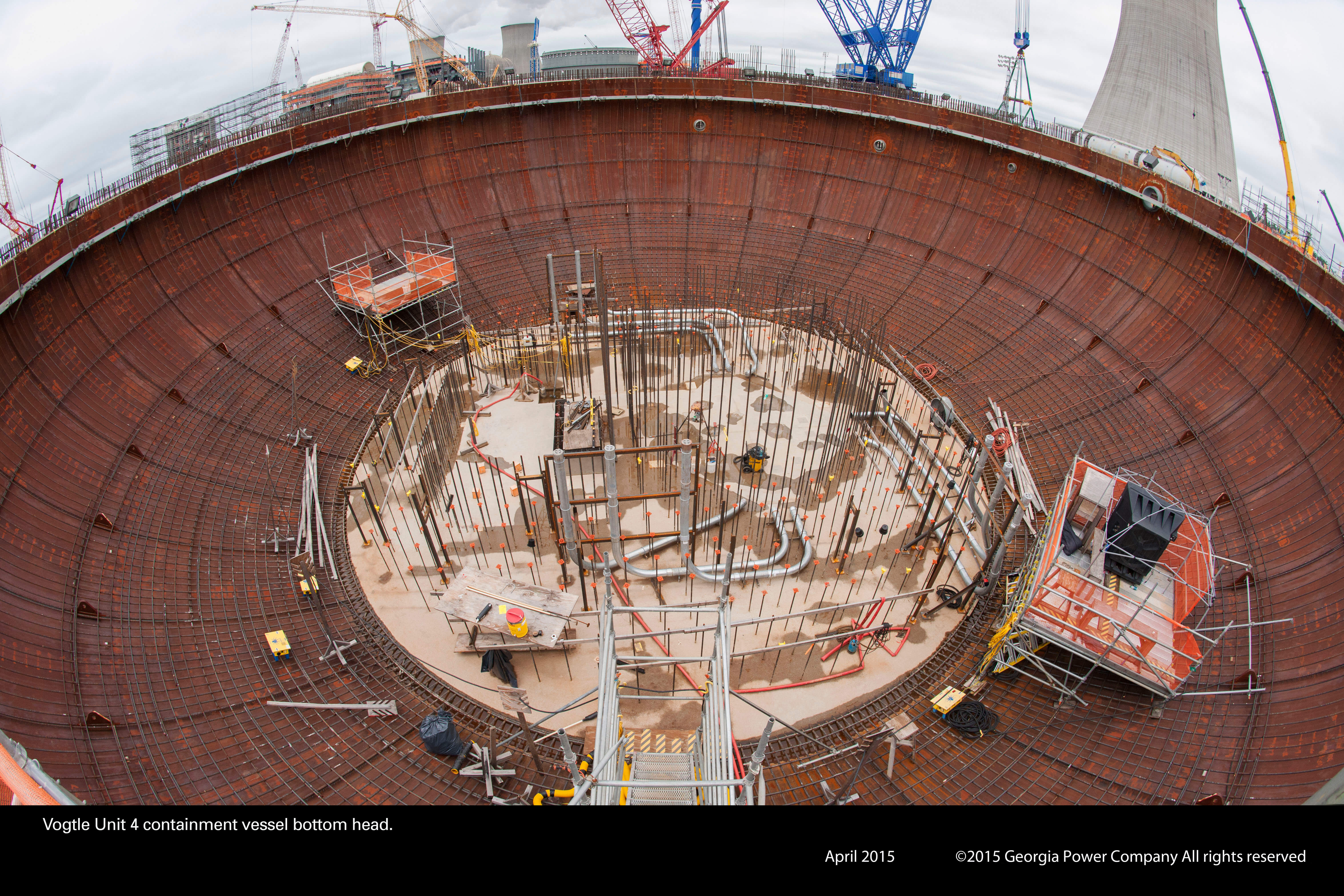
If you want to build a new nuclear plant you’d better order the largest component, the pressure vessel, from Japan. They aren’t made in America anymore; stagnation killed that business.
All is not lost to the United States, but there are warning signs that our global scientific and technological expertise is under attack. It is not yet vanquished, but we’re showing signs of vulnerability: Technological arrogance ia leading to the blunting our precious cutting edge.
That arrogance, in the way of arrogance, comes from past triumphs rather than present capabilities.
Once, the world waited for U.S. scientific and technological innovations. The U.S. Patent and Trademark Office was stuffed — and still is — with American inventions. But when it comes to applied science, the world no longer waits for us.
When Britain and France built the Concorde supersonic jet, they expected the United States to be right behind them. When the Senate killed the idea of a government-financed, supersonic civilian airliner, the Concorde was doomed.
Likewise with advanced nuclear reactors. When the Clinch River Breeder Reactor was terminated, it was a mortal blow for similar programs in Britain, France, and even Russia.
Those were the days. We were the pacesetter.
Nowhere was this truer than nuclear power. It was our technology, and the world almost demanded our leadership. So much so, it even copied our licensing procedure; and anti-nuclear activists were trained in the American ways. The German pebble bed reactors, British graphite-moderated reactors, and Canadian natural uranium reactors were squeezed in the market, because the Americans, who were known to know about these things, favored the light water reactors. That would make them the world standard. And so it was.
But as the United States faltered, the world went ahead. France built out its nuclear fleet, Japan forged forward, and today reactors are under construction in many places: 25 in China, five in South Korea, and two in tiny Finland.
With this in mind, there’s something sad about the Obama administration’s backing, with loan guarantees, just two new reactors. Gosh.
The industry has calculated that 65 new reactors are needed but two are welcome, even if they’re to be built by Westinghouse, once one of the great industrial names and now a subsidiary of Toshiba.
The master must now play the apprentice.
With sickening predictability, Friends of the Earth President Erich Pica was on the PBS NewsHour to decry the oh-so-modest Obama move. He stopped by the morgue on the way to the studio to get cadavers of arguments about subsidies and waste.
Those technologies favored by Pica, wind and solar, are only known to us because of government subsidies. But he went further and had more disingenuousness up his sleeve. He claimed hydroelectric production from dams built decades ago as part of the “green” bounty. He must know that many members of his own organization want those dams torn down.
Jim Riccio of Greenpeace said that splitting atoms is inherently dangerous and should be treated as such. There’s a vision of pusillanimous policy-making. Columbus, keep those ships in port. John Glenn, stay on Earth; space travel is, er, dangerous.
Worrying about what’s going to happen to nuclear waste in thousands of years is a conceit as well as a stupidity. There’s plenty of it around, which did not come from electric production but from making weapons and driving Navy ships and submarines.
Civilian electric production is the bonus, not the problem, and the solution lies in nuclear evolution — not in unilateral abandonment. –For the Hearst-New York Times Syndicate
- no responses
-