-
-
OMB Faulted in Nuclear Abandonment
-
If you are heading north on the Chesapeake Bay, just above where the Patuxent River enters it, and you will see the Cove Point liquefied natural gas terminal and gas processing plant.
Journey on, about three miles, and you will see a superbly landscaped industrial installation that, unlike the gas terminal, blends into the cliffs of Maryland. This is the Calvert Cliffs Nuclear Power Plant, which has been making electricity quietly, efficiently and abundantly since 1975.
By contrast, the Cove Point terminal and gas plant has been a symbol of the vagaries of the gas market. Much of the time it has stood idle, with fishermen maneuvering their boats among its piers.
The terminal and gas plant were built when the nation was gripped by the energy crises of the 1970s, the Arab oil embargo and the Iranian Revolution. In reality, it has been seldom used and has been in and out of operation.
Until a week ago the Calvert Cliffs 1 and 2 reactors on the site, 55 miles from Washington, were set to get a sibling. Calvert Cliffs 3, a joint venture between Baltimore-based Constellation Energy and Electricite de France (EDF), the mammoth French utility, was to join the two venerable reactors.
But now there will be no Calvert Cliffs 3, according to one of its promoters, Constellation Energy.
The project has been canceled–strangled in its crib, if you like, by the White House Office of Management and Budget, which insisted on a sky-high fee in return for federal guarantees of the private commercial loans the utilities needed to finance unit 3.
By effective axing a new reactor, OMB was acting against the Department of Energy, Congress, and possibly the wishes of President Obama.
The nuclear industry and Unistar, the Franco-American company created to build Calvert Cliffs 3, say the fee was wrongly calculated and that OMB is contradicting the intention of Congress and the expressed hopes of Obama.
Two other projects are also facing cancellation over the OMB calculation for its loan guarantees. The utilities say the terms dictated by OMB are onerous, just too expensive.
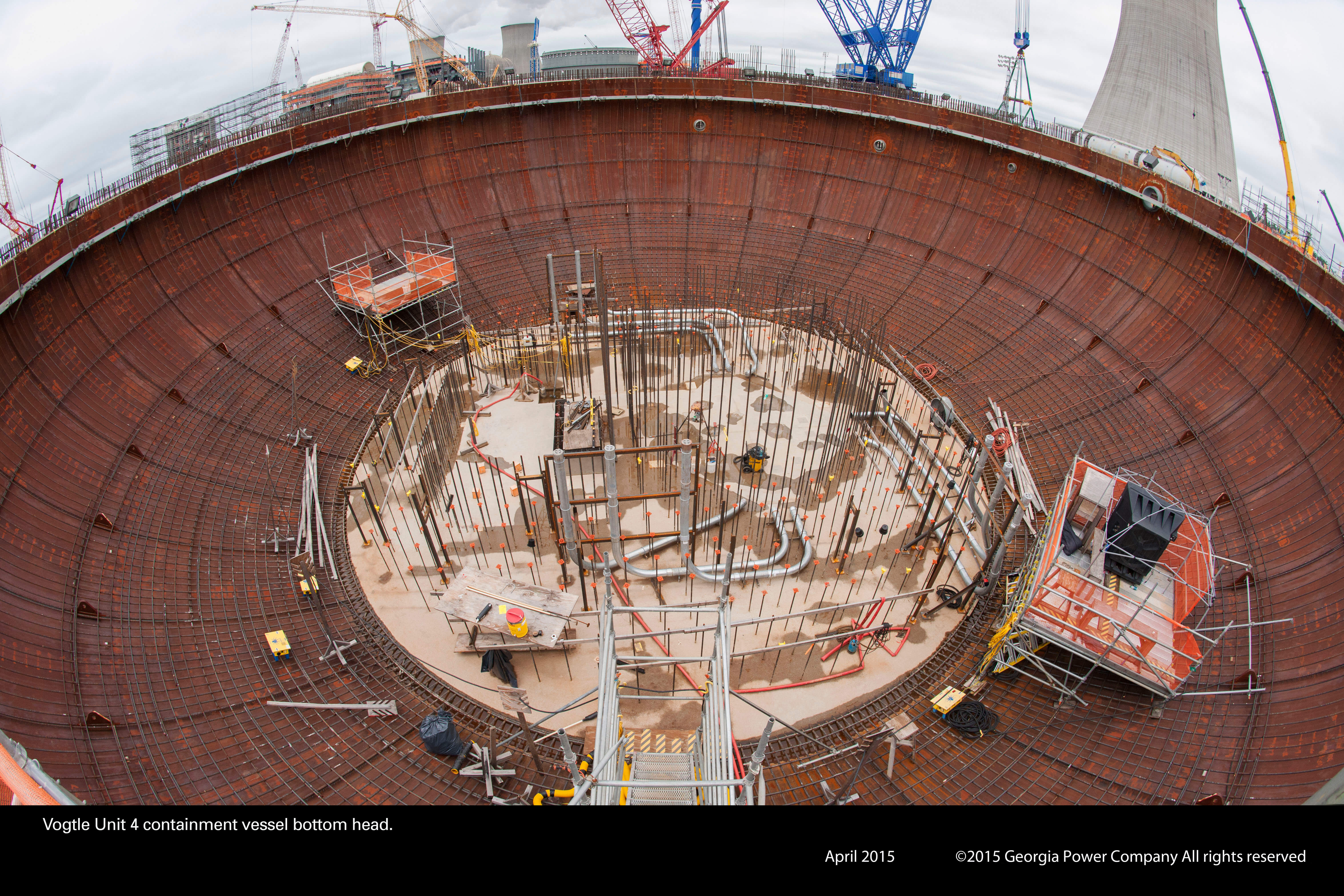
Yet the industry can find no appellate route to overcome OMB’s stubbornness. The result is that the much-anticipated “nuclear renaissance” is sliding back into the dark ages. Only the Atlanta-based Southern Company has come to terms with the government and secured the loan guarantees it sought to build Vogtle, a two-unit plant.
Strangely, Congress and the Obama administration have declared the revival of nuclear power as national policy and money has been appropriated for loan guarantees. But both are seeing their desires frustrated by OMB and its formula for calculating the chances of success or failure for new nuclear projects.
Angered by OMB intransigence, the two partners in Unistar, Constellation and EDF, have fallen out. EDF wants to go ahead, despite the difficulties and possibly with French government money. It may have to find a new American partner because a foreign company cannot own a U.S. nuclear plant outright.
Adding to the agony of the nuclear reactor builders is the changed picture for natural gas. There is now too much of it coming to market for utilities to ignore the attendant low price. At the inception of the new wave of interest in reactors, gas was selling for $7 to $8 for 1,000 cubic feet (a standard measure in gas pricing). Now it is bobbing around $4 for 1,000 cubic feet, which means that utilities are tempted by the low capital cost of gas turbines.
The joker is wild–and the joker is natural gas, aided by the OMB bureaucracy.
The nuclear renaissance may be delayed again in the United States, but 58 nuclear plants are under construction in 14 countries, including 24 in China alone.
- 3 responses
-
-
-
The Shocking Truth about Future Electric Supply
-
TORONTO — “Nobody knows de trouble I see,” goes the Negro spiritual. It could have been playing as background music in Toronto, where the Edison Electric Institute (EEI) held its annual convention this week. Things are not terrible for the U.S. electric utility industry at the moment. But the industry’s future is more uncertain than it has ever been.
The challenge facing the industry is that we are using more electricity than ever before, with our bigger homes that have more appliances and gadgets. To meet future demand, according to Jeffry Sterba, chief executive officer of Albuquerque-based PNM Resources, the industry will need to spend $800 billion. Not only is it unclear whether it can raise this amount of money, in a time of constrained credit, but it is also unclear what expenditures public policy will sanction. Consider:
l The future of coal, which accounts for more than half of U.S. electricity production, is uncertain. It is the largest contributor to greenhouse gases, and the future promise of “clean coal” is yet to be realized on a large scale at an affordable price.
The second hope for coal, carbon capture and sequestration is a hot topic in electric utility circles. But David Ratcliffe, chief executive officer of Southern Company, confesses that it has been oversold, and it will be many years—if ever—before the technical and legal issues of diverting carbon dioxide and storing it by the millions of tons underground. The uncertainty has already caused 60 new coal-fired power plants to be canceled, according to speakers at the EEI convention.
l Nuclear power, a longtime favorite of utility executives, still faces public antipathy, and the cost of building the plants has gone up as the American engineering base has declined. The large steel forgings that are required for the construction of nuclear power plants can no longer be made in the United States. They must be imported from Japan at great expense.
Also the U.S. nuclear industry, thriving in the 1960s, has been sold off. Where once there were four U.S. companies that offered nuclear power plants, now General Electric is the only one, and it is in partnership with Japan’s Hitachi. The once mighty Westinghouse Electric is owned by Japan’s Toshiba. And the other vendor is France’s Areva. Only Ratcliffe’s Southern Company is sure that it is going to build two nuclear units. Other companies, including Baltimore-based Constellation Energy, have expressed interest in about 14 new plants—only about half of these are likely to be built.
The Nuclear Energy Institute reckons the nation needs a whopping 65 new nuclear plants to meet new demand and to allow for the retirement some of the more than 100 operating reactors.
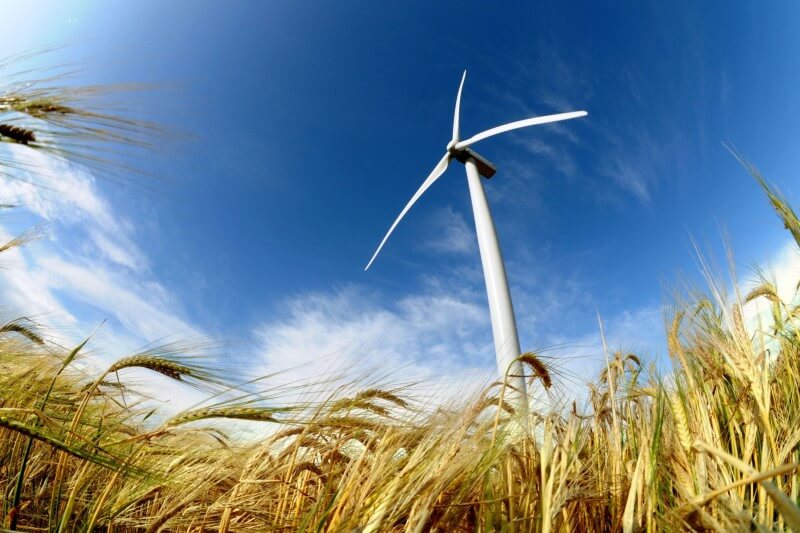
l Wind is a bright spot. Wind power has proved more effective for most utilities than they thought, and they are now scrambling to find ways to store wind power as compressed air. But while the West and the North have good wind conditions, the Southeast suffers stagnant air at the time it most needs electricity: the summer. It is an energy option that is not open to every utility and because of its dispersed nature, it is not as manageable as a large coal-fired or nuclear plant.
l Then there is natural gas, which is the most desirable fossil fuel. In the past 25 years, the use of natural gas to turn utility turbines has grown exponentially, from 0 to 30 percent of generation. The trouble is that there is not that much indigenous natural gas around, and there are demands on it for home heating, cooking and fertilizer manufacturing, which are seen as higher uses than making electricity.
This has led to a boom in the import of liquefied natural gas from Asia and the Middle East. But James Rodgers, chief executive officer of Duke Energy, which is a large gas seller as well as a major electric utility, says that this is a dangerous route. By the time the gas gets here, after it has been liquefied and transported in an oil-burning tanker, Rodgers says it is only 20 percent less polluting than coal. Worse, he says this will harness U.S. electric rates to the global cost of oil and gas. That way he sees ruin.
Like their compatriots in the oil industry, utility executives talk a lot about technology coming to the rescue. But so far, there has been nothing that suggests a revolution akin to the one that transformed telephony is in sight. The only really happy thing here in Toronto is the realization that the plug-in hybrid car is coming, and that it will boost utilities’ revenues by recharging overnight when there is a surplus of electricity.
- no responses
-